



Italy’s Working Holiday Visa Guide for 2026
by Jessie Chambers 2 years ago
15 MIN READ
This article was reviewed and updated for accuracy on February 1st 2026
Italy does this thing where it makes you fall in love with it before you've even unpacked. The food tastes better than it has any right to. The coffee is so good you'll never look at your home country's version the same way again. The architecture is ridiculous (in the best way), and somehow, even a Monday afternoon feels like a scene from a film you'd pay to watch.
The Working Holiday Visa gives you up to between 6 to 12 months. Not as a tourist racing through Rome with a guidebook and a selfie stick, but as someone who actually gets to experience what life here feels like. You're working at a cafe in Florence, your flatmate's from Seoul, and you've somehow convinced yourself that eating pasta for lunch and dinner every day is completely normal and acceptable.

Picture This:
- Late nights in Rome: You've just finished a shift at a trattoria in Trastevere, and you're meeting friends for aperitivo that somehow turns into dinner, then drinks, then stumbling home at 2 a.m. wondering how Italians do this every week and still function.
- Weekends in Tuscany: You're cycling through vineyards on Saturday, wine tasting in Chianti, then spending Sunday at a farmhouse eating homemade pasta with a family who insisted you stay for lunch (and then dinner, because apparently leaving before 9 p.m. is rude).
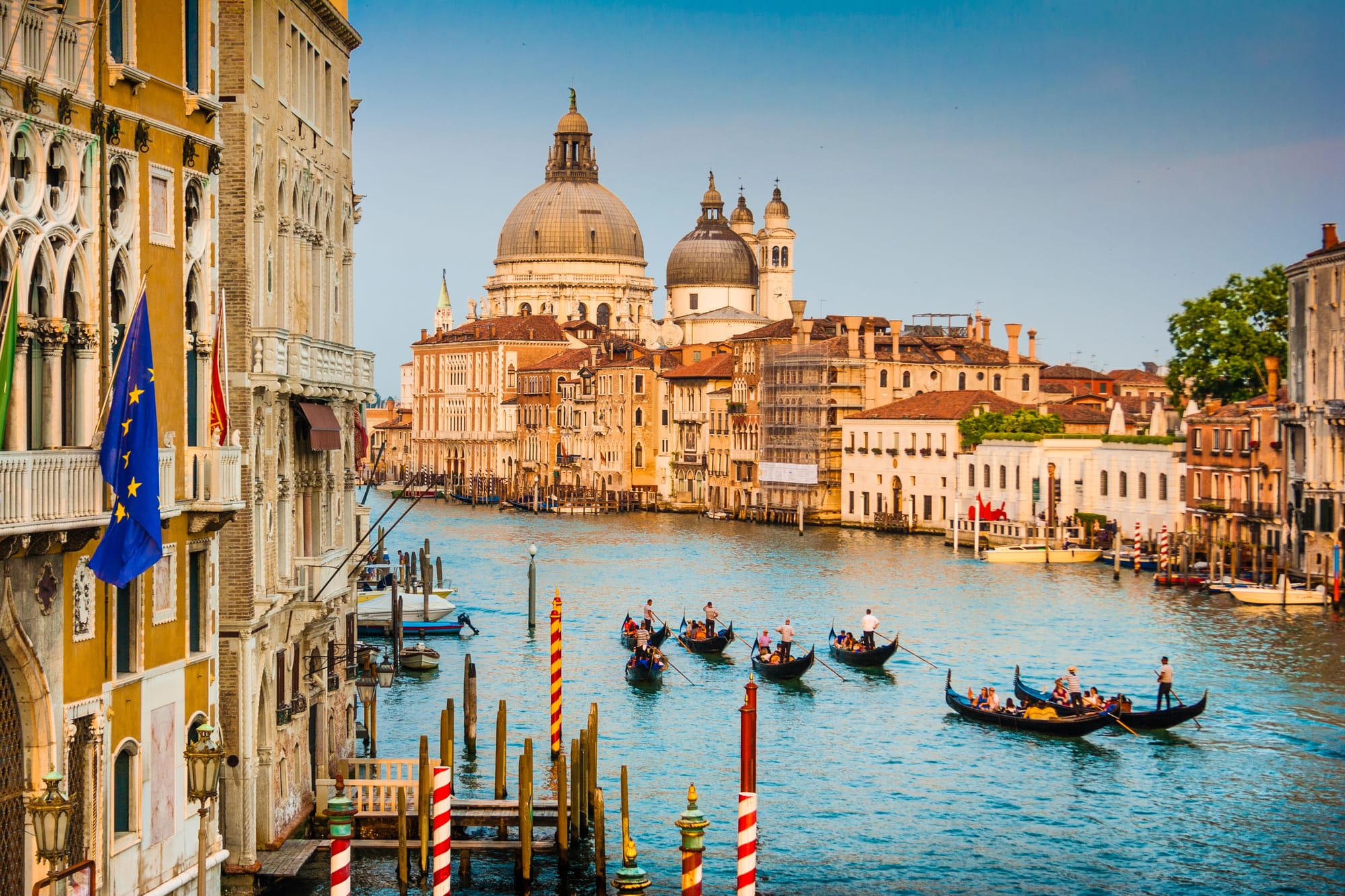
- Exploring Venice: You're getting lost in the canals (on purpose this time), wandering through tiny alleyways that don't appear on Google Maps, and realising that Venice at sunrise, before the tourists wake up, is one of the most beautiful things you'll ever see.
The Italian Working Holiday Visa is part of bilateral agreements between Italy and a handful of countries: Australia, New Zealand, Canada, South Korea, Hong Kong and Japan. Young travellers aged 18 to 30 (35 for Canadians and Australians, because apparently some countries negotiated better) can live and work in Italy between 6 - 12 months. That's a full year to eat your body weight in carbonara, learn Italian slang from locals who think your accent is adorable, and figure out why Italians care so much about which region makes the best wine.
Whether you're drawn to Italy's art, food, fashion, or the fact that every single town looks like it belongs on a postcard, this visa gives you the freedom to explore it all. From the bustling fashion capital of Milan to the peaceful, absurdly beautiful shores of the Amalfi Coast, Italy is waiting.
This guide breaks down everything you need to know. Eligibility, application process, how to find work, where to live, and how to settle in without losing your mind to Italian bureaucracy (spoiler: it's a lot).
Italy is waiting. The pasta, the wine, the cobblestone streets, the kind of sunsets that make you forget what time it is. When the moon hits your eye like a big pizza pie? That's amore. Andiamo.
Why Italy Is One of the Best Countries for a Working Holiday
Italy isn't just beautiful (though it really, really is). It's also incredibly practical as a working holiday base, especially if you're the type who wants to see as much of Europe as possible without bankrupting yourself in the process.
You're in the Heart of Europe
Italy's location is unbeatable. You're a cheap flight or train ride away from pretty much anywhere in Europe. Weekend in Paris? Two-hour flight. Quick trip to Croatia? Even closer. Barcelona, Vienna, Prague, the Greek islands, all ridiculously accessible. Budget airlines like Ryanair and EasyJet run routes for €20 to €50 if you book in advance, which means your Italian base becomes a launchpad for exploring the entire continent. You could spend your weekdays working in Rome and your weekends bouncing between European capitals like it's nothing.
The Cost of Living Is Manageable (If You're Smart About It)
Yes, the big cities are expensive. But Italy also has plenty of smaller cities and towns where rent is cheap, food is incredible, and life moves at a slower, more affordable pace. These places give you the full Italian experience without the eye-watering prices. And here's the thing: even in expensive cities, if you're eating like a local (markets, delis, pizza al taglio instead of sit-down restaurants every night), you can live well on a reasonable budget. Plus, many hospitality jobs come with staff meals, which in Italy is a serious perk.
The Work-Life Balance Is Real
Italians work hard, but they also know how to live. Sundays are sacred. August is for holidays (the whole country basically shuts down). The concept of "la dolce vita" isn't just a cute phrase. It's genuinely how people approach life here. You won't find the hustle culture you get in places like London or New York. Instead, you'll find a rhythm that actually lets you enjoy the fact that you're living in Italy, not just working there.
The Social Scene Is Built for Travellers
Italy has a massive backpacker and working traveller community, especially in the major cities. You'll meet people from all over the world, and the social scene is easy to tap into. Hostels run pub crawls, language exchanges happen in bars, and aperitivo culture (cheap drinks and free food from 6 to 9 p.m.) is basically designed for socialising on a budget.
Visa Business: Docs You Absolutely Must Have
When you're prepping to apply for the Italian Working Holiday Visa, organisation is your best friend. The Italians are famously particular about paperwork (bureaucracy is practically a national sport), which is why when you book with Global Work & Travel, your Trip Coordinator walks you through every single form, every checkbox, every weird document requirement. Nobody should have their application rejected because their passport photo had lighting that made them look like a wanted criminal. Your Trip Coordinator will make sure that lighting is el natural and giving. Here's what you'll need:
- Financial Requirements: You must demonstrate that you have sufficient funds to support yourself at the beginning of your stay. The exact amount required may vary, but it’s typically recommended to have around €2,000-3,000.
- Return Ticket: You will need to show proof of a return ticket or sufficient funds to purchase one at the end of your stay.
- Valid Passport:Your passport must be valid for the entire duration of your stay in Italy, with at least one blank page for visa stamps.
- Completed Visa Application Form: You’ll need to fill out the specific visa application form, which you can obtain from the Italian embassy or consulate in your country.
- Passport-Sized Photos: Provide recent passport-sized photographs that meet Italy’s visa photo requirements.
- Health Insurance: Proof of comprehensive health insurance that will cover your medical expenses throughout your stay in Italy.
- Proof of Accommodation: You may need to provide proof of accommodation, such as a booking confirmation from a hotel or a letter from a host.
Top Tip: If you're an Australian citizen applying for the visa, your Medicare card falls under the reciprocal healthcare agreement with Italy, which means you're covered for your first six months. But here's the important bit: this coverage is limited. It only covers essential care that can't wait until you get home, and it must be through Italy's national health service, the Servizio Sanitario Nazionale.
What the reciprocal agreement covers:
- Care as a hospital patient or out-patient at public and authorised hospitals
- GP and specialist care from public clinics, health centres, and authorised hospitals and clinics
- Urgent dental care at public hospitals
What it doesn't cover:
- Medicines and tests (you'll likely need to pay for these out of pocket)
- Any care after your first six months in Italy
- Private healthcare facilities
- Non-urgent treatment
This is why you'll still need comprehensive travel insurance for your entire stay, and you'll need to prove you have it when you apply for the visa. The reciprocal agreement is a safety net for emergencies in your first six months, not a replacement for proper insurance.
Our Global Travel Cover is a comprehensive option that ensures you're fully protected for both the medical and travel chaos that can pop up, including the things Medicare won't touch.
- Ski & Snowboard Injury Coverage: If winter sports are on your itinerary, rest assured you’re covered for injuries on the slopes.
- Intensive Care: Access emergency medical care abroad, including intensive care if necessary.
- Lost Luggage & Theft: Protection for your checked luggage and personal belongings.
- Prescription Medication: Coverage for essential medications while away from home.
- Medical & Political Evacuation: Be prepared for unforeseen emergencies, including medical and political evacuations.
- Return of Mortal Remains: We’ll handle the costs and logistics in the unfortunate event of a fatal accident.
- Accidental Death & Dismemberment: Financial protection in case of serious accidents.
- Trip Interruption: Coverage for unexpected interruptions to your trip.
- Personal Liability: Stay protected in case of accidental injury or damage caused by you.
With Global Travel Cover, you’ll have the protection you need to travel confidently, knowing that you're covered for both medical emergencies and the unexpected.

Finding Work in Italy - Show Me the Money, Hunny!
Finding work in Italy on a Working Holiday Visa is easier than you might think, as long as you're flexible and not expecting to land a corner office at Gucci on day three. The Italian job market loves international workers in hospitality, tourism, seasonal work, and teaching. If you speak even basic Italian, your options multiply. If you don't, there are still plenty of roles where English (and a decent smile) will get you through the door. The key is showing up prepared with a CV that doesn't look like it was written in 2003.
How Global Work & Travel Makes Finding Work Easier
When you book with us, you're not just getting visa support and someone to guide you through the Italian paperwork maze (though that alone is worth it). You're getting direct access to job opportunities we've pre-vetted, partnerships with employers who actually want to hire you, and an app that features an AI-powered resume builder so you don't have to panic-google "how to write a CV for Italy" at midnight. Here are three of the most popular ways to work in Italy through Global Work & Travel:
Tutor in Italy: If you're a native English speaker (or fluent in another language), tutoring is one of the easiest and most flexible ways to earn money in Italy. You'll work with Italian students of all ages, helping them nail their conversational skills, prep for exams, or just stop translating every sentence in their head before they speak. The pay is decent, the hours are flexible, and you get to actually connect with locals instead of just handing them coffee.
Au Pair in Italy: Live with an Italian family, look after their kids, help with light household duties, and in exchange you get accommodation, meals, and a weekly allowance that goes straight into your "weekend trips to Sicily" fund. This is full cultural immersion. You'll learn Italian faster than Duolingo could ever teach you, eat home-cooked Italian food every night (goodbye, sad pasta from the hostel kitchen), and get an insider's view of what life in Italy actually looks like.
IT Internship in Italy: If you're building a career in tech, an IT internship in Italy can be genuinely brilliant. Italian companies (especially in Milan, Rome, and Turin) are hungry for international talent with actual tech skills. You'll gain real work experience, build your CV, improve your Italian, and make connections that could open doors later. It's a smart move if you want your working holiday to boost your career instead of just being a year-long excuse to eat gelato.
Beyond Our Trips: Other Jobs Available on the Working Holiday Visa
The Italian Working Holiday Visa lets you work in pretty much any temporary or part-time role. Here are the most common ones, and they often come with perks like staff meals or accommodation.
Hospitality, Retail & Events Hotels, restaurants, cafés, bars, retail stores, and event venues are constantly hiring. Waiting tables in Rome, working reception in Florence, selling leather goods in Milan, or running music festivals in Bologna. The pay is decent (especially with tips), the hours can be brutal, but you'll meet other travellers, practise your Italian, and score staff meals.
Seasonal Work Vineyards during harvest (vendemmia), ski resorts in winter, beach clubs in summer. Seasonal jobs are intense, social, and often include accommodation. Grape picking in Tuscany? You'll work hard, drink wine with the crew after hours, and leave with stories. Ski season in the Dolomites? Same energy, but with mountains and après-ski.
Farm Work & Agriculture Rural areas like Tuscany, Umbria, and Piedmont offer agricultural work during harvest season. It's physical, outdoors, often beautiful, and some farms include accommodation and meals. You're living on an Italian farm, eating fresh produce, getting paid. Not bad.
Real Talk: The Italian job market favours people who speak at least some Italian. Basic conversational skills will open way more doors than showing up with nothing. And if you're booking one of our trips (tutoring, Au Pair, internships), get in touch early. The best placements fill up fast.
Travel and Adventure Tips
Italy is a land of diverse landscapes and experiences, from the rolling hills of Tuscany to the sparkling coastlines of the Amalfi. Whether you’re headed north or south, we’ve got you covered with the best spots to explore.
Northern Italy: Fashion, Mountains & Lakes
Start your northern Italy journey in Venice, where the canals are genuinely as beautiful as everyone says (and yes, also as touristy and occasionally smelly in summer, but still worth it). The city is built on water, which feels absurd and magical at the same time. Go early in the morning before the cruise ship crowds arrive, and you'll see why people lose their minds over this place.
Head to Milan for fashion, art, design, and aperitivo culture that'll ruin you for happy hour anywhere else. It's slick, expensive, and unapologetically stylish. Then swing by Bologna for medieval charm, the best food scene in Italy (yes, better than Rome, fight us), and arcades you can wander under for hours.
If you love the outdoors, the Dolomites are waiting. Dramatic mountain views, hiking trails that look like screensavers, and ski resorts that feel like they belong in the Alps (because they basically are). For something more peaceful, visit the Lakes Region. Lake Como and Lake Garda are absurdly beautiful, surrounded by mountains and dotted with villas that make you question your life choices.
Hidden Gems of the North:
- Turin: History, museums, industrial charm, and seriously good chocolate. It's underrated, less touristy, and perfect if you want a northern Italian city without the Milan price tag.
- Trieste: Sitting at the crossroads of Italy and Slovenia, this coastal town has a mix of Italian and Austro-Hungarian influences. Coffee culture here is next-level (they take it as seriously as Vienna), and the vibe is completely different from the rest of Italy.
Southern Italy: Sun, Sea & Ancient Ruins
Southern Italy is where things slow down, the food gets cheaper, and the landscapes get properly dramatic. Start in Naples, the chaotic, vibrant birthplace of pizza (yes, actual pizza, not the stuff you get at chain restaurants). It's loud, it's gritty, it's incredible. From there, visit the ruins of Pompeii and Mount Vesuvius. Both are close by, both are worth the trip.
Head down to the Amalfi Coast, where cliffs drop into impossibly blue water, towns like Positano cling to hillsides, and every corner looks like it was designed specifically for Instagram. It's stunning, it's expensive, and it's crowded in summer. Go anyway.
Further south, Sicily is waiting. Ancient Greek ruins, beaches that rival the Caribbean, and Palermo, a city that feels like a completely different country. The food here is a mix of Italian, Arab, and North African influences, and it's some of the best you'll eat anywhere.
Don't skip Matera, a UNESCO World Heritage site with ancient cave dwellings (sassi) carved into limestone cliffs. It's one of the oldest continuously inhabited cities in the world, and it looks like nowhere else on earth.
Hidden Gems of the South:
- Puglia: Whitewashed towns like Alberobello (famous for its cone-shaped trulli houses), endless olive groves, and a pace of life that makes the rest of Italy look rushed. It's beautiful, affordable, and still relatively quiet.
- Calabria: Rugged coastlines, mountains that drop straight into the sea, and some of the best southern Italian food you'll find. It's off the beaten path, which means fewer tourists and more authentic experiences.
Travelling Around Europe from Italy
One of the great advantages of having an Italian Working Holiday Visa is the ability to travel around Europe. As Italy is part of the Schengen Area, visa holders can explore other Schengen Zone countries (like France, Spain, Germany, and Greece) for up to 90 days within any 180-day period without needing additional visas. Time spent in Italy doesn't count towards this 90-day limit, only time spent in other Schengen countries. Your main residence and work must remain in Italy, but you're free to take short trips across Europe during your stay.
Final Thoughts
So here you are: Italy, a year ahead of you, and a Working Holiday Visa that's basically permission to trade your normal life for something infinitely better. Espresso that actually tastes good, aperitivo every evening, weekends bouncing between Tuscan vineyards and Venetian canals, and a version of work-life balance that doesn't feel like a corporate buzzword.
But here's the reality check. Italy doesn't do anything quickly or simply. The paperwork is famously complicated. The job market favours Italian speakers. Showing up unprepared means spending your first month stressed, broke, and wondering why nobody warned you it would be this hard.
You could wing it. Some people do. Most of them wish they hadn't.
Or you could book with us. Visa sorted, job opportunities lined up, Trip Coordinator who knows exactly where people trip up, and support from the moment you book to the moment you reluctantly leave. All the admin chaos handled so you can focus on actually living in Italy instead of drowning in forms and stress.
Italy isn't going anywhere, but the working holiday window closes when you turn 31 (or 36 if you're Australian or Canadian). Get the visa, get the support, get on the plane. Andiamo.
Frequently Asked Questions (FAQs)
- What is the Italian Working Holiday Visa?
The Italian Working Holiday Visa allows young people from eligible countries to live, work, and travel in Italy for up to one year, offering a unique opportunity to experience Italian culture while earning money to support their stay.
- Who is eligible for the Italian Working Holiday Visa?
Applicants must be between 18-30 years old (35 for Canadian citizens) at the time of application and hold citizenship from a country that has a bilateral working holiday agreement with Italy. Eligible countries include Australia, Canada, New Zealand, and South Korea.
- How long does the Italian Working Holiday Visa last?
The visa is valid for 12 months, during which you can live, work, and travel throughout Italy.
- Can I extend my Italian Working Holiday Visa?
No, the Italian Working Holiday Visa cannot be extended or renewed. Once your one-year stay ends, you must leave Italy or apply for a different visa if eligible.
- What jobs can I take with this visa?
You can work in sectors such as hospitality, tourism, agriculture, and retail. However, professional roles that require specific qualifications, such as doctors or lawyers, are restricted unless you meet Italian certification requirements.
- How do I find a job in Italy?
Job opportunities can be found through online platforms like Indeed, InfoJobs, or local job boards. Networking, visiting employment agencies, or connecting with local businesses directly are also effective ways to find work.
- Do I need a Permesso di Soggiorno (Residence Permit) to work in Italy?
Yes, within 8 days of arriving in Italy, you must apply for a Permesso di Soggiorno (residence permit) at the local Questura (Police Headquarters). This permit is essential for legal residence and employment in Italy.
- How do I set up a bank account in Italy?
To open a bank account, you’ll need your passport, residence permit (or receipt of application), Codice Fiscale (Italian tax code), and proof of address. Popular banks for foreigners include UniCredit, Intesa Sanpaolo, and BNL.
- Do I need health insurance in Italy?
Yes, you must have health insurance during your stay. Australians are covered for the first six months under the Australia-Italy Reciprocal Health Care Agreement, while other nationalities need private health insurance for the entire duration.
- What is the best way to get around Italy?
Italy has an extensive public transport system, including high-speed trains (Frecciarossa), buses, and local trains. Regional buses and rental cars are great options for exploring rural areas or coastal routes like the Amalfi Coast.
- How do I manage taxes in Italy?
Your employer will handle tax deductions from your salary. If you are self-employed or have additional income, you may need to file a tax return at the end of the tax year.
- What’s the average cost of living in Italy?
The cost of living varies by region. Northern cities like Milan and Venice are more expensive, while southern cities and rural areas are generally more affordable. Major costs include rent, groceries, and transportation.
- Can I study while on the Italian Working Holiday Visa?
Yes, you can take short-term or part-time courses during your stay, but you won’t be eligible for a student visa or financial aid.
- Can I travel outside Italy and return while on this visa?
Yes, as a Schengen visa holder, you can travel to other Schengen countries for up to 90 days within a 180-day period. Be sure to carry your passport and residence permit when traveling.
- What happens when my Italian Working Holiday Visa expires?
Once your visa expires, you must leave Italy. If you wish to stay longer, you’ll need to explore other visa options such as a work visa, student visa, or sponsorship, depending on your eligibility.
If you want to learn about the digital nomad visa's for other countries, we have extensive guides for countries like the United Kingdom, Germany, New Zealand, Italy, Portugal, Spain, Thailand, and Japan.
We also publish extensive working holiday visa guides for United States, Canada, Australia, United Kingdom, Germany, France, Spain, Italy, Ireland, Korea, Argentina, Chile, Hong Kong, Estonia, Netherlands, Austria, Slovakia, Portugal, Peru, Greece, Singapore, Malaysia, Taiwan, Mongolia, New Zealand, Ecuador, Brazil and more coming.

Jessie Chambers
Jessie is a globetrotter and storyteller behind the Global Work & Travel blog, sharing tips, tales, and insights from cities to remote escapes, informed by the collective experience and real-world knowledge of teams across our business.