


How Much Does It Cost to Study in Italy?
by Jessie Chambers 2 years ago
11 MIN READ
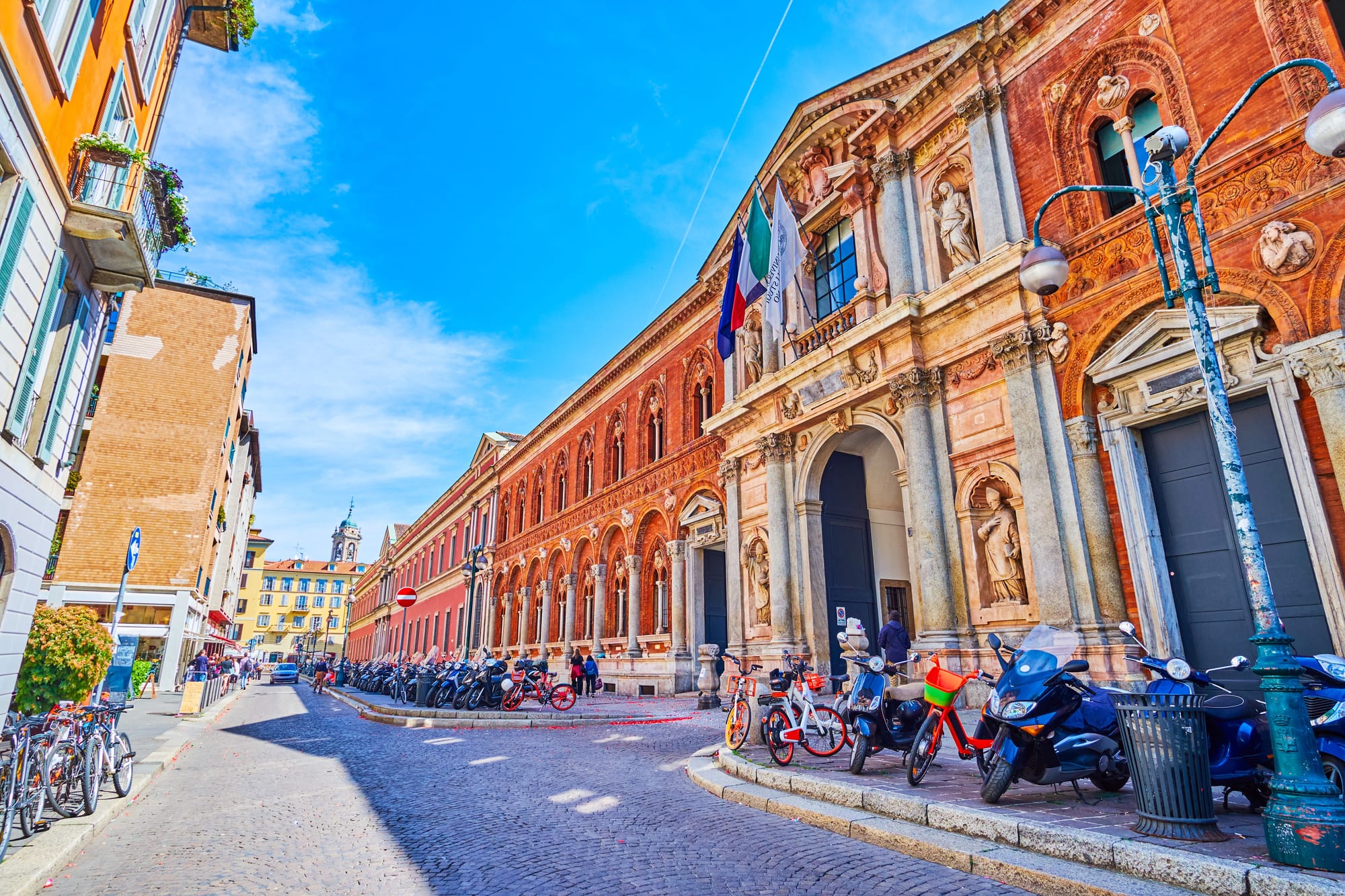
Picture an ordinary weekday. You take your espresso standing at the bar because sitting down costs extra, and you learned that in week one like everybody does. Your lecture is in a building older than most countries. At seven you order one spritz and the bar hands over a plate of food you did not order and are not paying for, because that is simply how aperitivo works and nobody is going to explain it to you.
You will develop opinions about coffee. Strong ones. Unsolicited ones. Your friends back home will hear about it. You will develop a real passione for life’s smaller things, and you will likely use your hands a lot to tell the story.
Studying in Italy is not one decision, though. It is a week of learning to pull espresso in Florence. It is three months of learning Italian in Bologna. It is three years of law in a lecture hall with a ceiling worth looking at. Same country, wildly different levels of commitment, and price tags that are nothing alike. There is a version of this for everyone, so it truly feels like a “pick-your-own-adventure”.
Now the part that does not compute. A year of tuition at the oldest university on earth costs less than a single term at most British or American ones. The University of Bologna has been teaching since 1088. An international student can enrol for under €4,000 a year, and depending on what your household earns, a good deal less than that. Yah - we know, it does sound kind of ridiculous, but sometimes it is as good as it sounds!
Here is where it gets complicated. Tuition is the cheap part. The costs that actually catch people are the ones nobody puts in a prospectus: a €700 health contribution that appears from nowhere, a residence permit you have eight days from landing to apply for, and a Milan rent that is quietly double what your mate in Naples is paying for a nicer room.
So this is every number in one place. Tuition, visa, permit, health cover, rent, food, transport, and the levers that bring the total down. Plus the routes into Italy that skip the degree entirely, because living in Florence for a while does not legally require a thesis. Life is for a little living, right?
What It Actually Costs: The Short Version
For a non-EU student at a public university, here is the whole picture on one screen.
Most students at a public university land somewhere between €10,000 and €18,000 for the year once everything is counted - this heavily relies on how many spritz and carbonaras you plan to throw down the hatch… literally no judgement, we would pack a moo moo if it were us. The other big variable is the city you pick to live - that will move that number up or down the scale the most.
Hold an EU or EEA passport and you can ignore the visa, permit and health rows completely. What does apply to you is covered further down.
One caveat on the table itself: it is built for a full academic year. On a short course most of those rows shrink or vanish outright, and the under-90-days section below is the one you actually want.
Tuition Fees, and the Income Test Nobody Explains
This is the part of Italian higher education that confuses almost every international applicant, and it is worth understanding properly because it is where the largest savings sit.
Italian public universities do not charge one flat fee. They band tuition according to your household's assessed income, which means two students sitting in the same lecture on the same course can be paying wildly different amounts. At the bottom of the scale sits a no-tax band where fees fall away almost entirely. At the top sits the maximum, which is usually somewhere around €4,000.
Non-EU students access this by submitting an income assessment, sometimes called an ISEE parificato, prepared through an authorised Italian assistance centre using documents from your home country. It is admin-heavy and it has a deadline, and students who miss it get charged the top band by default. Get it done and it can be the difference of thousands.
What you are looking at by institution type:
- Public universities, undergraduate: €900 to €4,000 per year, income assessed. This is where Bologna, Sapienza, Padua, Turin and most of the big names sit.
- Public universities, postgraduate: €1,000 to €5,000 per year, same income banding.
- Private universities: €6,000 to €20,000 or more per year, with the top business schools sitting well above that. Fees here are usually the same for EU and non-EU students.
- Language schools and short courses: priced per week or per course rather than per year, and outside the university fee system entirely.
Two things get added on top of the headline figure at public universities: a regional contribution towards student services, and a stamp duty. Neither is large, but neither is usually included in the number advertised on the course page, so check the university's own fee schedule rather than a summary.
On payment, most institutions split the year into instalments rather than demanding the lot upfront, typically with the first due at enrolment and the rest across the academic year. Terms vary by university, so confirm the schedule directly with yours before you build a budget around it.
Visa and Permit Costs
What you pay here depends entirely on your passport. We always recommend checking with your local gov websites to ensure you have the most recent and accurate information regarding your passport and countries entry fees and conditions.
If You Hold an EU or EEA Passport
You need no visa and no residence permit - oh la la, you lucky duck! Stay beyond 90 days and you register as a resident with the local town hall, which is a form-filling exercise rather than a cost. Your European health card covers you for medical care. Effectively, the entire section below does not apply to you, and your Italian degree costs you tuition plus living expenses and nothing else.
If You Hold Any Other Passport
Studying for under 90 days: you need a short-stay Schengen visa, and here is the detail almost nobody publishes. A short-stay visa applied for on study grounds carries no visa fee at all. The standard €90 Schengen fee does not apply to you. If you are coming for a language course or a short course, this is genuinely free.
The waived fee is only half of it. Under 90 days there is no permesso di soggiorno to apply for, which means no eight-day countdown at the post office and no €700 health enrolment either. What you do need is private travel medical insurance meeting the Schengen minimum of €30,000, covering emergency treatment and repatriation across the whole zone. That is the entire administrative gap between a short course and a degree, and it is wider than most people assume before they look.
Studying for over 90 days: you need a national type D study visa, which costs €50. Note that the general type D national visa runs to €116, but the study category is charged at the lower rate, so make sure your application is lodged under the right heading.
Before you apply, university courses generally require pre-enrolment through the Universitaly portal, which is the only official channel for it.
What you have to prove. For university enrolment, the Ministry of Foreign Affairs sets the minimum financial resources at €6,079.45 for the year, a figure pegged to Italy's social allowance and reviewed annually. One catch that trips people up: a bank guarantee or an insurance policy is not accepted as evidence. It has to be personal or family funds, or a guarantee from a recognised institution such as a university or a public body.
Then, within eight working days of arriving, you apply for your permesso di soggiorno through a post office kit. Miss the window and you create a problem for yourself that takes months to unpick.
The permit itself costs roughly €116 for a first year, made up of four separate payments:
- Stamp duty: €16
- Postal handling: €30
- Electronic permit card: €30.46
- Issue contribution: €40 for a permit of three to twelve months, rising to €50 for one lasting between one and two years
A study permit runs from six months to a year depending on your course, and renews for as long as your studies continue. Usefully, it converts into a work permit while it is still valid, which is how a lot of graduates stay on after finishing.
Health Cover: The Thing You Really Need
Everything in this section applies to stays over 90 days. On a short course you sit outside the Italian system altogether, and a Schengen-compliant private policy is what you need instead.
If you are not from the EU or EEA, you cannot get your residence permit without proof of health cover, and this is the single most commonly missed cost in every budget we see.
You have two routes. The first is a private policy meeting Italy's minimum standard, which is coverage of at least €30,000 including emergency hospital treatment and repatriation. The second is voluntary enrolment in the Italian national health service, which gives you the same access an Italian resident has, including a general practitioner.
Voluntary enrolment costs a minimum of €700 a year for students. Two details matter enormously here. It runs to the calendar year rather than your enrolment date, and it cannot be split. Enrol in October and you pay the full €700 for what is left of that year, then pay again in January. Students who time it deliberately, where their course dates allow, save themselves the better part of a thousand euros.
There is also a gap worth knowing about. National health enrolment covers you in Italy, but it does not issue you the European health card (excuse me, weekends across to another country are so on the cards), so the moment you take a weekend in Vienna or a cheap flight to Lisbon (derr, a given), you are uninsured. Given that half the appeal of studying in Italy is how close everything else is, that matters more than it sounds.
Global Travel Cover sits in the Global Work & Travel family and is built for exactly that gap: cover with a $0 deductible, buyable and renewable from anywhere in the world, snow sports included as standard rather than as an upsell, and a 24/7 emergency line. It also handles the parts your Italian cover never touches, like the flight over, a cancellation before you leave, and luggage that ends up in a different country to you.
What Living There Costs, City by City
Rent is the number that decides your year. Everything else moves within a fairly narrow band, but accommodation between Milan and Naples differs and you want to really think about what kind of lifestyle you want - packet of pasta at home every single night, or the luxury to splurge just a little.
Bologna and Turin sit between Florence and the southern cities, with the caveat that Bologna's student population is enormous relative to its housing stock, which pushes September prices up.
Three things that are not in the table and should be in your budget:
- Utilities: €70 to €200 per month, and very often excluded from the rent you were quoted. Winter heating in the north is the spike.
- Deposits and agency fees: most landlords want two to three months upfront, and many want an Italian guarantor.
- Course materials: varies enormously by discipline, but art, design and architecture students should budget seriously for it.
Across the country, a student's total monthly living cost typically runs €600 to €1,500 depending on the city and how you live.
Working While You Study
You are allowed to work, and the rules are more generous than most people assume.
- Non-EU students: a study permit allows part-time work of up to 20 hours per week (or 40 hours per week furing official university holiday periods). You can spread that however suits your timetable.
- EU and EEA students: no restriction at all.
- Where the work actually is: hospitality in tourist-heavy cities, English tutoring, on-campus roles, and seasonal work over summer.
- Afterwards: a valid study permit can be converted to a work permit, so finishing your course does not mean the end of your time in Italy.
Worth flagging for the short-course reader: none of this applies to you. A short-stay Schengen visa carries no work rights, so a language course or a two-week studio course is studying and travelling, not earning. If working is the actual goal, the routes at the bottom of this article are the ones to look at.
Hot tip: knowing a little of the Italian language changes your options here dramatically. Tourist-facing hospitality in Florence or Rome will hire you in English. Almost everything else will not.
If working is more the point than studying, Italy also runs a working holiday arrangement with a handful of countries, which we cover in full in our Italy working holiday visa guide.
Where to Base Yourself
Bologna is the one we would pick, and we are not being subtle about it. A student population so large it sets the entire rhythm of the city, which means cheap food, late trains and a bar for every conceivable mood. It is also two hours from almost everywhere else in the country, which turns weekends into a genuine perk rather than a logistical event.
Florence is the one everyone pictures, and the photographs undersell it. What nobody mentions is how small it is: you will walk everywhere, you will cross the Arno four times a day without noticing, and by month two you will have a specific gelateria you defend against all comers. The tourists are real and they are everywhere and you will learn which streets they never find.
Naples is where your money suddenly goes twice as far and your standards permanently rise. Loud, chaotic, ferociously proud, and the food is not up for discussion. A minor detail: Pompeii, the Amalfi Coast and Capri are all a short train or ferry from your front door.
The Cheaper Ways to Live in Italy
A three-year degree is one route into real time here, and for a lot of people it is not the sensible one. You can absolutely arrange any of the routes below independently, and plenty do. The trade-off is time, paperwork in a second language, and arriving without anyone expecting you.
If you want the learning without the degree, the short study trips in Italy run from one week to twelve, are open from 18, and finish with a certificate:
- Italian in Bologna: one to twelve weeks of language study with a homestay, cultural activities and a coffee break built into class specifically to get you talking to Italians.
- Cooking in Florence: two weeks learning from someone who learned from someone, with technique and ingredient knowledge you can actually use at home.
- Art History in Florence: two to four weeks from the Etruscans to the Renaissance, with guided access to the city's major monuments and museums.
- Painting & Drawing in Florence: two to four weeks of studio work in the city that arguably invented the discipline.
- Coffee Making in Florence: one week, and a skill that will follow you into every job and every kitchen you ever have.
- Gelato in Florence: one to two weeks. We are not going to pretend to be objective about this one.
One difference to price in before you book any of those: the Bologna course includes homestay accommodation, the Florence courses generally do not. Across a fortnight in Florence that is a second bill rather than a rounding error, so read the inclusions on the trip page before you build your number.
Final Thoughts
Here is the thing that makes Italy unusual. A world-class education can cost you less than the flights to get there, and the gap between an expensive year and a genuinely affordable one comes down to a handful of decisions you make before you even go: which city, which university, which income bracket you remembered to file for.
Get those right and the math be mathing in your favour. You end up with a year in a country built almost entirely around enjoying it, at a number your friends back home will make you explain twice.
And you do not have to start at three years. A week counts. A fortnight counts. A semester counts. Learning something in one of the most beautiful countries comes down to what you want to get better at, and where and how you want to enjoy it!

Jessie Chambers
Jessie is a globetrotter and storyteller behind the Global Work & Travel blog, sharing tips, tales, and insights from cities to remote escapes, informed by the collective experience and real-world knowledge of teams across our business.