



Greece Working Holiday Visa - A Complete Guide For 2026
by Jessie Chambers a year ago
10 MIN READ
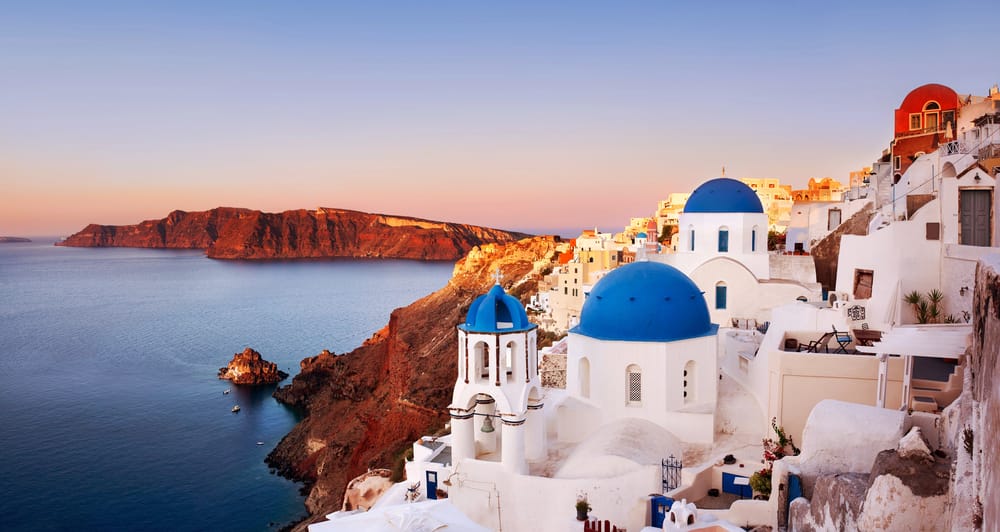
The first time the Aegean comes into view, you'll get it. Water so clear it looks edited, a tumble of white-and-blue villages down the hillside, a ferry horn somewhere out in the haze. Greece has a way of making the rest of your life feel a little beige by comparison.
It's plastic tables outside tavernas and dinners that start at 10pm and end when the owner pulls up a chair to join you. It's salt in your hair on a ferry deck at golden hour. It's a stranger pressing a glass of homemade tsipouro into your hand, then pressing a second one before you've finished the first.
The Greeks have a word, kefi: roughly, the spirit of joy and throwing yourself headlong into life. You don't study it. You catch it, somewhere around week two, and it doesn't really wear off.
What a "Greece Working Holiday Visa" Actually Is
Time for some honesty that a lot of guides skip. There is no single Greek working holiday visa that anyone in the world can apply for. What a "working holiday in Greece" actually means depends entirely on the passport you hold.
In general, a working holiday visa lets a young traveller live in a country for up to a year and take on work to help fund the trip, with cultural exchange as the real purpose. Greece offers that through narrow bilateral agreements with two countries, gives EU citizens an even simpler path through free movement, and points everyone else toward a handful of alternative routes.
So before you get attached to a plan, the first job is working out which lane is actually yours. The next sections lay them out.
The Routes at a Glance
- EU, EEA, or Swiss passport: no visa needed at all. Free movement lets you live and work in Greece, with a simple residence registration if you stay beyond three months.
- Australian citizens (18 to 31): the Greece and Australia Youth Mobility arrangement, up to 12 months, around 500 places a year, with study and English requirements.
- Canadian citizens (18 to 35): the Greece and Canada agreement through International Experience Canada, up to 12 months, and you can do it twice.
- Every other nationality: no working holiday visa exists, but the digital nomad visa, seasonal or sponsored work visas, and the 90-day visitor entry are all on the table.
- Insurance: health cover including hospitalisation and repatriation is required for the visa routes.
- Funds: proof of savings to support yourself, often cited at around €3,000.
- Where to apply: through the Greek embassy or consulate for your nationality, or via International Experience Canada for Canadians.
Why Greece Is Worth It
Here's the thing the postcards undersell: in Greece, the history isn't behind glass. You'll be walking to buy bread and pass a 2,000-year-old column someone has casually parked a moped against. The Acropolis sits over Athens like it's keeping a quiet eye on things. Whole islands feel like they've politely ignored the last few centuries and are all the better for it.
And then there's the sheer amount of it. Around six thousand islands and islets, only a couple of hundred inhabited, which means you could spend a full year here and barely scratch the surface. We would happily blow an entire summer ferry-hopping the Cyclades with no fixed plan and call it a personality. And it isn't all islands, either: the mainland hides monasteries perched on rock pillars at Meteora, the buzzing northern capital of Thessaloniki, and mountain villages most visitors never bother to reach.
The food deserves its own paragraph and isn't getting one, because we'd never stop. Just know this: a Greek salad eaten in Greece, tomatoes still warm from the sun, will retroactively ruin every Greek salad you've had before it.
Who Can Do a Working Holiday in Greece, and How
This is the part the old guides get wrong, so here's the accurate version, sorted by who you are.
If you hold an EU, EEA, or Swiss passport
You've got the easiest run by a mile. Freedom of movement means you don't need a visa or a work permit to live and work in Greece at all. Turn up, find work, find a flat. If you stay longer than three months, you register your residence with the local authorities and pick up a Greek tax number so you can be paid properly. That's genuinely most of it.
If you're Australian (aged 18 to 31)
Australia has a dedicated Work and Holiday arrangement with Greece, in place since 2019. It lets a capped number of young Australians (around 500 a year) live in Greece for up to 12 months, working to support themselves along the way. The conditions are stricter than most working holiday visas:
- Age: 18 to 31 at the time you apply.
- Education: a tertiary qualification, or at least two completed years of undergraduate study.
- Language: proof of English at roughly B2 level.
- Once only: you can't have done it before, and you'll need to show funds and health insurance.
If you're Canadian (aged 18 to 35)
Canada's agreement with Greece runs through International Experience Canada, and it's refreshingly flexible. The working holiday stream gives you up to 12 months in Greece, you can take part twice, and the upper age limit stretches to 35. Alongside the open working holiday stream, International Experience Canada also offers young professionals and international co-op routes for those who already have a job or internship lined up. You'll show proof of funds and health insurance with repatriation cover, in line with the other routes.
If you're from anywhere else
Here's the honest bit: there's no working holiday visa to Greece for you. It isn't a gap in this guide, it's just how the agreements work. Your realistic routes are:
- The Digital Nomad Visa: if you work remotely for clients or an employer outside Greece, this lets you live there for up to a year, renewable into a longer residence permit, with a monthly income threshold to meet.
- A seasonal or sponsored work visa: tied to a Greek employer, common in tourism and agriculture, and arranged before you arrive.
- The 90-day visitor entry: many nationalities can enter visa-free for up to 90 days in any 180, which is perfect for a long Greek summer, though you cannot work on it.
How to Apply
Because the route depends on your nationality, so does the process. Here's the shape of each.
EU, EEA, and Swiss citizens: there's nothing to apply for before you go. Once you're in Greece and planning to stay past three months, you register your residence locally and sort a tax number (AFM) and social security number (AMKA) so you can work and be paid.
Australians: you apply through the Greek embassy or one of the consulates (Canberra, Sydney, Melbourne, Adelaide, or Perth). Expect to provide your passport, proof of your tertiary study, an English-language certificate, evidence of funds, and health insurance covering hospitalisation and repatriation. Apply well ahead, because places are capped and the year's allocation can run down. Once approved, you enter Greece on the visa and convert it into a residence permit after you arrive, within the deadline your consulate sets.
Canadians: you go through International Experience Canada first, creating a profile and waiting for an invitation to apply, then complete the Greek consular step. Funds and health insurance are part of the deal.
Everyone else: the digital nomad and work visas are lodged through the Greek embassy or consulate in your country, each with its own document set, while the 90-day visitor entry needs no advance visa for many nationalities.
Whichever route applies, the on-the-ground admin in Greece is similar once you land: you sort your residence permit where one is required, register locally, and pick up your AFM and AMKA numbers, which are the keys to working, banking, and healthcare. None of it is hard, exactly. It's just paperwork that rewards patience and quietly punishes the disorganised.
Plenty of people pull the whole thing together themselves, and it works fine. It's just slower and more bureaucratic than it looks, so leave more runway than you'd expect, especially in summer when Greek offices wind down.
Work and Everyday Life
Whatever route gets you in, the work that funds a Greek year tends to look the same, and it leans hard into one industry: tourism. The roles that come up most:
- Hospitality: bars, tavernas, cafes, and hotels, especially on the islands and in Athens, where English-speaking staff stay in steady demand through the season.
- Tourism and water sports: reception, reps, tour support, and beach and boat operations, all booming from spring to autumn.
- Seasonal island work: the Greek summer runs roughly April to October, and island economies hire heavily across it, often with staff accommodation thrown in.
- Remote and freelance work: for digital nomad visa holders, you bring your own income and work from a laptop with a sea view.
Two practical truths. English will carry you a long way in tourist areas, but even basic Greek earns instant goodwill and opens up the roles locals actually fill. And the calendar matters more here than almost anywhere: the islands are electric in July and half-asleep in January, so line your plans up with the season you're chasing.
One more worth planning around: where you base yourself swings your budget hard. The big-name islands in August are gorgeous and genuinely expensive, while Thessaloniki, the mainland, and the quieter islands stretch the same money a great deal further.
The Reality Check
The biggest hurdle with a Greek working holiday is simply qualifying for one, because the dedicated routes only exist for Australians and Canadians, with EU citizens covered by free movement and everyone else improvising around the edges. Beyond eligibility, Greece runs on a seasonal economy, and the island jobs that look so appealing in summer mostly vanish by November, so timing is everything. The bureaucracy is real, and getting your AFM, AMKA, and residence paperwork sorted takes patience and more than one office visit. Island living can also be surprisingly pricey in peak season, when rent and ferry fares climb with the crowds. Sort your funds, your insurance, and your documents before you fly, and treat Greek admin as a slow game you can still win.
Places You Need to See
Athens. Don't let anyone tell you to rush through Athens to get to the islands. It's grimy and glorious and completely alive: rooftop bars staring straight at a floodlit Acropolis, street art across Exarchia, souvlaki at 2am that costs a few euros and tastes like a small religious experience. Give it three days minimum. It earns them.
Santorini and the Cyclades. Yes, Santorini's sunset is as ridiculous as advertised, and yes, you'll share it with a crowd. Worth it anyway. The smarter move is treating it as a doorway to the rest of the Cyclades: Naxos for beaches and real village life, Milos for moonscape coves, Paros for the sweet spot between buzz and calm. Island-hop, and thank yourself later.
Crete. Big enough to be its own country and proud enough to act like one. Pink-sand beaches in the west, a gorge you can hike for the better part of a day, mountain villages where lunch quietly becomes an afternoon, and a food culture locals will argue is the best in the country. We're not going to referee that fight, but we do have opinions.
The Easiest Way to Actually Experience Greece
Here's the honest bridge. Most people reading this won't qualify for a working holiday visa in Greece, and even those who do might not want to commit a whole year. The good news: you don't need either to spend a glorious stretch of time here. Many nationalities can enter visa-free for up to 90 days as a visitor, which is plenty of runway for a proper Greek summer.
If you'd rather not piece together ferries, hostels, and logistics on your own, Global Work & Travel runs two group trips through Greece, both open to ages 18 to 100 and built around the visitor entry most travellers already have:
- Greece Island Hopper: a 9-day run from Athens down to Santorini, taking in Mykonos and Ios along the way. Beaches, boat days, and a ready-made crew, with the planning handled for you.
- Best of Greece: a 15-day deeper dive that pulls the region's highlights into one comprehensive run, for people who want more than a quick taste.
Straight up: a guided trip costs more than winging it with a backpack and a ferry app, and a tour is a holiday, not a way to earn money on the road. What you're paying for is zero logistics and an instant group of people to share it all with. Current pricing and dates sit on each trip's page.
If a Greek summer has been a someday plan for a few years now, a fixed set of dates has a funny way of turning someday into booked.
Getting Your Insurance Sorted
Wherever you land in the visa breakdown, insurance is part of the deal. The Australia and Canada routes both require health cover that includes hospitalisation and repatriation for your full stay, and Global Work & Travel's Greece trips deliberately leave insurance out so you can pick your own. So a policy you actually trust isn't optional, it's groundwork.
Global Travel Cover, the insurance brand in the Global Work & Travel family, slots in neatly. It runs on a $0 deductible, you can buy and renew it from anywhere rather than only before you fly, snow sports are covered as standard, and a 24/7 emergency line has your back when something goes wrong at 3am on an island with one pharmacy. Greece is also a natural launchpad for the wider Mediterranean, so cover that follows you across borders is the sensible call.
Final Thoughts
Greece rewards the people who actually show up. The ones who miss the early ferry and end up at a better beach. Who say yes to a dinner invitation from people they met an hour ago. Who let a country that has been perfecting the good life for three thousand years show them how it's done.
Whether your way in is an EU passport, the Australian or Canadian agreement, or simply a flight and ninety good days, the hard part was never the logistics. It was deciding to go. The sea is the same temperature whether you book this year or keep scrolling, but only one of those versions of you ends up in it.
We also publish extensive working holiday visa guides for United States, Canada, Australia, United Kingdom, Germany, France, Spain, Italy, Ireland, Norway, Korea, Argentina, Chile, Hong Kong, Estonia, Netherlands, Austria, Slovakia, Portugal, Peru, Greece, Singapore, Malaysia, Taiwan, Mongolia, Indonesia, Vietnam, Thailand, New Zealand, Chile, Ecuador, Brazil, Israel, Czech
Republic, Mongolia, Papua New Guinea, and more coming.

Jessie Chambers
Jessie is a globetrotter and storyteller behind the Global Work & Travel blog, sharing tips, tales, and insights from cities to remote escapes, informed by the collective experience and real-world knowledge of teams across our business.