



Working Holiday Visa Chile: The Complete Guide For 2026
by Jessie Chambers 2 years ago
12 MIN READ
This article was reviewed and updated for accuracy on April 10th 2026
Think South America and your brain probably lands on Brazil’s beaches, Argentina’s steaks, or Peru’s ruins. Chile rarely makes the shortlist, and honestly, that’s the first reason to actually go.
Somewhere between the world’s driest desert in the north and Patagonia’s glaciers in the south, Chile runs a country so geographically unhinged that travelling from one end to the other is roughly London to Baghdad. Literally. And most of the travellers who could legitimately spend twelve months there on a working holiday visa have no idea the option exists. Main character energy is right there for the taking.
The pitch is proper simple. You get a year. You fund it from inside Chile, working in hospitality, tourism, language teaching, or seasonal work. You live cheaper than most of Europe and wildly cheaper than Australia. And in your time off you have access to one of the most geographically iconic countries on the planet: desert stargazing one weekend, wine country the next, Patagonian wilderness the one after that. No other South American country offers this kind of working holiday arrangement at this kind of scale.
This guide walks you through exactly how the visa works, who’s eligible, what the application looks like, and what the year actually involves once you’re there.

Quick summary
- Who: citizens of countries with a bilateral working holiday agreement with Chile (full list below)
- Age: 18 to 30 for most nationalities and with the exception of 18-35/34 for a special few
- Duration: up to 12 months, once in a lifetime
- Fee: approximately USD $50 to $150 depending on nationality
- Funds required: roughly the equivalent of USD $3,000, varies slightly by country
- Apply: directly through Chile’s SERMIG Digital Procedures Portal
- Processing: 15 to 20 working days, travel within 90 days of visa issue
Why Chile Is the Working Holiday Most Travellers Miss
Australia, New Zealand, Canada, Japan. Those are the working holiday visas people talk about. Chile sits outside the conversation for most people, which is exactly why going there gives you a year that feels genuinely different from everyone else’s working holiday story.
A few things about the country that rewrite your expectations fast. The geography is genuinely one of the great freaks of the planet: 4,300 kilometres long, never more than 350 kilometres wide, running from the Peruvian border at the equator’s edge down to Tierra del Fuego near Antarctica. You can stand in the driest place on earth on a Tuesday and walk on a glacier the following Saturday. The climate, the food, the landscape, the pace of life, all of it changes as you move down the country, and twelve months feels like the minimum you’d need to do it properly.
One thing worth knowing before you commit: Chilean Spanish is famously, affectionately the hardest Spanish on the continent. Vowels disappear. “Cachai?” becomes its own piece of punctuation. Entire phrases compress into what sounds like a different language. If you arrive with tidy textbook Spanish, the first two weeks will feel like someone is pulling a prank on you. Then you adjust, and every other Spanish-speaking country starts to sound like it’s speaking in slow motion for your benefit.
Visa at a glance
Chile’s Working Holiday Visa is a bilateral arrangement: your country has to have an active agreement with Chile for you to qualify. The specifics, age limits, quota, fees, vary by nationality, so always confirm your country’s current terms with the Chilean consulate before applying.
Eligible nationalities
Chile currently has working holiday agreements with the following countries (verify with the Chilean consulate in your country as agreements can be updated):
- Australia, Austria, Canada, Colombia, Czech Republic, Denmark, France, Germany, Hungary, Ireland, Japan, Luxembourg, Mexico, New Zealand, Peru, Poland, Portugal, South Korea, Sweden, Switzerland
Age requirements
- 18 to 30/34/35 - you need to check your countries eligibility and age range to ensure you're in the category of green flag entry!
- Applications must be submitted before your upper-age birthday
Quotas per nationality
Some countries have annual visa caps. Known examples include:
- Australia: approximately 3,400 places per year
- Canada: approximately 750 places per year
- New Zealand: approximately 940 places per year
- France: approximately 400 places per year
- Ireland: approximately 200 places per year
- Germany: no annual cap
Quotas reset annually and can fill before year-end for smaller allocations. Apply early in the cycle for the best chance.
Core conditions
- Valid for up to 12 months from entry into Chile
- Once in a lifetime: you can only hold this visa one time
- Cannot bring dependants (spouses or children) on this visa
- Must travel to Chile within 90 days of visa issue
- Maximum 6 months with the same employer
- Study or training permitted for up to 6 months of your stay
- Passport must be valid for the entire stay, generally with 6 months buffer
- Australian applicants need basic Spanish verified by the Chilean Consulate as part of the application
How to Apply, Step by Step
Chile’s Working Holiday Visa is applied for directly, by you, through the Chilean government’s SERMIG Digital Procedures Portal (serviciomigraciones.cl). There is no agency sitting between you and the application. That’s mostly good news: it’s cheaper, the process is reasonably clear, and it puts you in control. It’s also on you to get the paperwork right first time.
Documents you’ll need
- Valid passport (copy of personal information page)
- Proof of sufficient funds (bank statements typically showing the equivalent of USD $3,000 or similar, varies by country)
- Travel and medical insurance that meets Chilean visa requirements, covering hospital care and repatriation
- Police clearance certificate from your home country
- Medical certificate confirming good health
- Passport-sized photos to Chilean consular specifications
- Cover letter explaining your reasons for applying
- Flight confirmation or evidence of funds to purchase a return ticket
- Completed application form from the SERMIG portal
The application process
- Confirm your eligibility: check that your nationality has a current agreement with Chile, that you’re within the age range, and that the annual quota for your country is still open
- Gather your documents: police clearance and medical certificates take the longest, so start those early. Allow at least 4 to 6 weeks to pull everything together
- Sort your insurance: you need a policy that meets Chile’s WHV requirements before you can submit
- Register on the SERMIG portal: create an account at serviciomigraciones.cl, select “International Agreements” as your residency type, and choose “Working Holiday”
- Complete the application: fill in the personal details form, upload your PDF documents (named clearly: LastName_PoliceCertificate etc.), and pay the visa fee (typically USD $50 to $150 depending on nationality, paid on approval)
- Wait for processing: standard processing is 15 to 20 working days. The consulate may email additional requests, so check regularly
- Receive your visa: on approval you’ll get a visa label or confirmation letter. You then have 90 days to enter Chile
- Within 30 days of arrival: register at the local Civil Registry for your Chilean ID card (RUT/Cédula). You’ll need this for working, opening a bank account, and most official processes

Work Life in Chile
The Chile WHV allows you to work for any employer for up to 6 months. After that, you can switch employers as many times as you like within the 12-month limit. The jobs that work best for working holiday travellers tend to sit in hospitality, tourism, language teaching, and seasonal agriculture, though any legal employment is fine under the visa.
- Hospitality: bars, cafes, restaurants, and hostels across Santiago, Valparaíso, San Pedro de Atacama, Pucon, and Puerto Natales. English-speaking travellers are in demand in tourist zones, particularly in Patagonia and the Atacama
- Tour guiding: if you can work in two or more languages, guide companies in Patagonia, Easter Island, and the Atacama actively recruit. Trekking, wine tours, astronomy tours, all viable
- Language teaching: private language academies in Santiago, Valparaíso, and Concepción hire casual English tutors. Private one-to-one tutoring also has strong demand
- Ski resorts: Valle Nevado, Portillo, and Nevados de Chillán hire seasonal staff for the June-to-September ski season
- Seasonal agriculture: grape harvest in the Central Valley (February to April), cherry and apple picking, and packhouse work in rural regions
- Office and admin: Santiago has a decent market for short-term contracts and remote-friendly roles if you have specialist skills
Pros and watch-outs
Places You Need to See
San Pedro de Atacama sits at 2,400 metres in the world’s driest desert, and the night sky there is the reason people book observatory tours for the first time in their lives - you want to see twinkle, you’re going to see twinkle! There’s no light pollution, no moisture in the air, and no atmosphere apologising for itself. Astronomers built ALMA, the most advanced radio telescope on earth, about forty minutes away. That’s the quality of sky you’re working with.
Valparaíso is what happens when a UNESCO heritage site is also a working port, a graffiti gallery, a bohemian enclave, and structurally questionable all at once. The hills are stacked with coloured houses that should not be attached to the terrain the way they are. The street art is museum-grade and there is no museum, just the walls. A ninety-minute bus from Santiago that changes the register of your entire year.
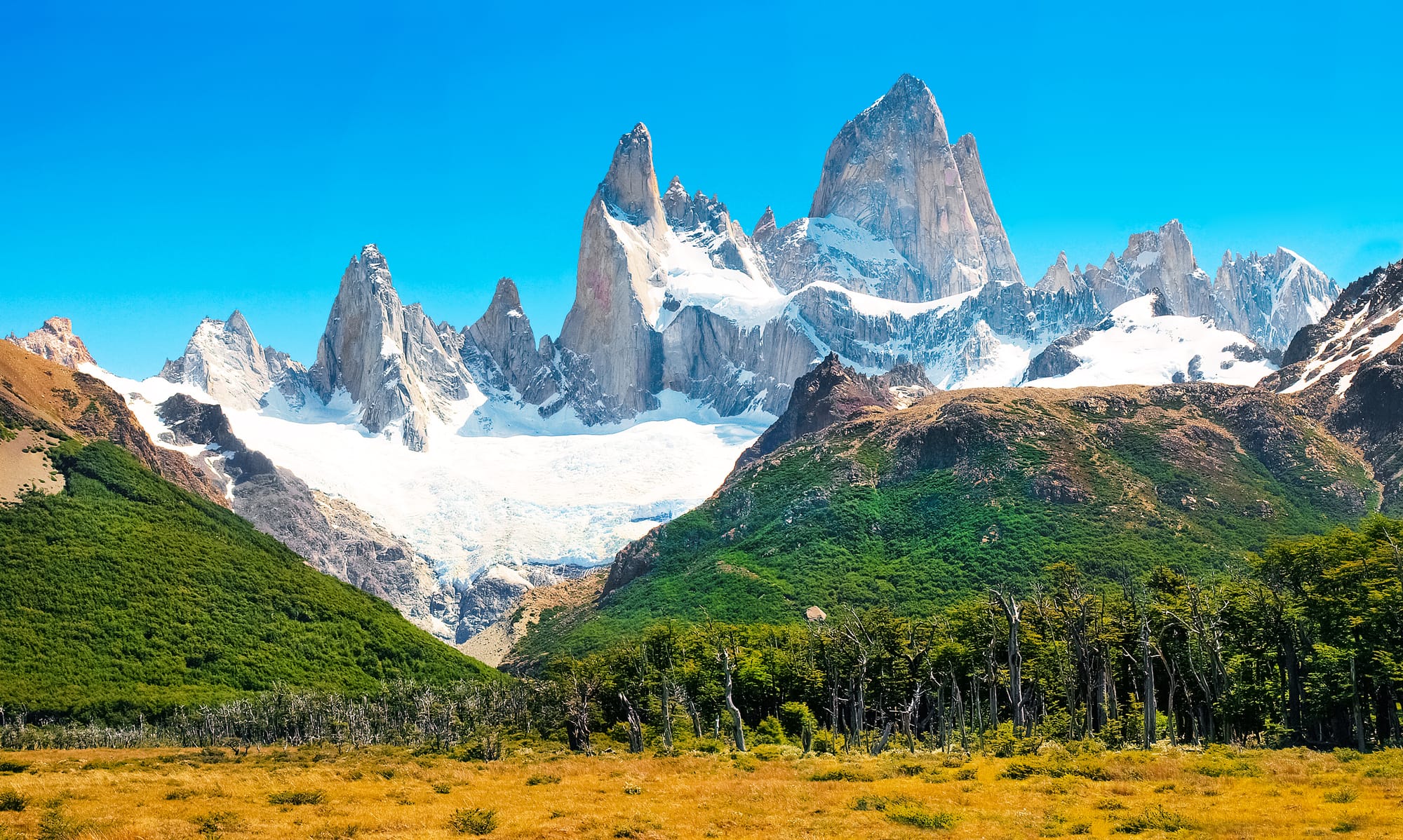
Torres del Paine in Chilean Patagonia is the park most serious hikers eventually pilgrimage to, and the photos genuinely undersell it. The W Circuit is a 5-day trek past glaciers calving into turquoise lakes, condors riding the thermals overhead, and granite towers rising straight out of the earth like an AI-generated prompt someone overcorrected. It is the kind of place that rewires your default setting for what a landscape is allowed to do.
Easter Island (Rapa Nui) is a five-and-a-half hour flight from Santiago into the middle of the Pacific, about as remote as inhabited land gets. The moai statues are famous. What the photos don’t show is how small the island is (you can drive around it in a day), how genuinely warm the Rapa Nui culture remains, and how completely different it feels from anywhere else in Chile. Expensive to get to. Worth the flight.
The Chilean Lake District around Puerto Varas and Pucon is what Switzerland would look like if Switzerland had perfect conical volcanoes, hot springs you can soak in for free, and a German-Chilean cultural fusion that produced both strudel and ceviche on the same menu. Quieter than the headline destinations. Often more rewarding for it.
The Elqui Valley in the north is a narrow green corridor cut through the desert, home to pisco distilleries, more observatories, and a reputation for what locals politely call “energetic properties.” Whether or not you believe in the energy grid, the night sky is genuinely otherworldly and the local pisco sour is the benchmark against which all others should be judged.
Settling in: The First Month
The practical work of setting up a working holiday in Chile happens in the first few weeks. Most of it is straightforward if you know what’s coming.
- Accommodation: most working holiday travellers start in a hostel (Bellavista or Providencia in Santiago, Cerro Alegre or Cerro Concepción in Valparaíso are all solid bases) for the first two weeks, then move to a shared apartment. Facebook groups, local property sites like Portal Inmobiliario, and word-of-mouth through hostel contacts are how most people find their longer-term place
- Chilean ID card (RUT): required within 30 days of arrival if you plan to work, open a bank account, or rent long-term. Register at the nearest Civil Registry (Registro Civil) office with your passport and visa confirmation
- Banking: opening a Chilean bank account generally requires your RUT and can be slow. Many working holiday travellers keep their home bank card for the first month or two and transition once the Cedula arrives. A multi-currency travel card is useful in the transition period
- Transport: Santiago’s metro is clean, extensive, and cheap. Long-distance buses (Turbus, Pullman, Cruz del Sur) run the length of the country and overnight coaches are how most travellers cover the big distances. Domestic flights make sense for Patagonia unless you’ve got a week to spare
- Spanish: if you arrive with no Spanish, prioritise an intensive course in the first month. It’s the difference between a working holiday and a year of nodding politely. Santiago, Valparaíso, and Viña del Mar all have accessible language schools
- Tax: your employer may request your RUT for tax purposes. Employed workers pay into Chile’s social security system (AFP and Fonasa/Isapre). Keep records of your employment and income for future visa applications and tax reporting at home
Frequently Asked Questions
Can I switch employers?
Yes. You can change employers as often as you need within the 12-month visa, up to a maximum of 6 months with any single employer.
Do I need fluent Spanish?
For most roles, functional Spanish (roughly B1) is enough. Bars, hostels, and tour companies in tourist regions often hire with much less. For office work or anything client-facing in a professional setting, you’ll need more. Australian applicants must verify basic Spanish with the Chilean Consulate as part of the application itself.
Can I extend beyond 12 months?
The Working Holiday Visa itself does not extend. If you want to stay longer, you’d need to apply for a different visa category (typically a temporary residence visa through a job offer, a student visa, or family reunification). Start that process before your WHV runs out, not after.
Can I apply from anywhere, or only my home country?
You typically need to apply from your country of nationality at the Chilean consulate covering your jurisdiction. Some specifics vary by country, so check with your nearest Chilean consulate.
Is a return ticket required?
Most consulates accept either a return/onward ticket or proof of funds sufficient to purchase one. Confirm the specific requirement for your nationality during the application.
How much does the visa actually cost?
The visa fee varies by nationality, typically falling between USD $50 and USD $150. You only pay if your application is approved. On top of that, budget for insurance (required), police certificate fees, medical certificate costs, and document translations if needed.
Ready to Go?
Chile’s Working Holiday Visa is one you apply for directly yourself through the SERMIG portal. There’s no agency between you and the Chilean government, and there doesn’t need to be. Global Work & Travel doesn’t offer a Chile Working Holiday package, but we do offer a few
products that stack cleanly into the year:
- Highlights of Chile and Argentina tour: a guided tour covering the greatest hits of both countries, ideal as a front-loaded add-on before your working holiday begins, or a reward lap at the end. A stunning way to meet people, connect and explore the highlight of this part of the world.
- Global Travel Cover: travel and medical insurance that meets the Chile WHV requirements. Insurance is mandatory for the visa application and for entry, so getting a policy that’s purpose-built for working holiday stays (including adventure sports, which you will absolutely do in Chile) is worth getting right up front.
Everything else, the visa itself, the timing, the paperwork, the arrival basics, is in the sections above. Treat this guide as your working document, apply direct, and the year takes care of itself once you’re on the ground.
Atacama skies. Patagonian granite. Valparaíso street art. Santiago wine country. Chilean Spanish that will humble you and then reward you. One of the most geographically extreme countries on earth, accessible for twelve months on a visa most travellers have never heard of. The quotas fill. The eligibility window closes. The year waits for nobody in particular. Apply.
References
Visa requirements, fees, quotas, and processing times are set by Chilean authorities and bilateral agreement partners, and are subject to change. Always verify the current requirements for your nationality with the Chilean consulate in your home country before applying.
¹ Chile (official government portal): Servicio Nacional de Migraciones (SERMIG), International Agreements and Working Holiday Visa applications. https://serviciomigraciones.cl/en/international-agreements/
² Chile (tourism and eligibility): Chile.travel, Working Holiday in Chile: agreements and requirements. https://chile.travel/en/blog/working-holiday-in-chile-which-countries-have-agreements-and-all-the-requirements/
³ Chile (Civil Registry and RUT): Servicio de Registro Civil e Identificación. https://www.registrocivil.cl/
If you want to learn about the digital nomad visa's for other countries, we have extensive guides for countries like the United Kingdom, Germany, New Zealand, Italy, Portugal, Spain, Thailand, and Japan.
We also publish extensive working holiday visa guides for United States, Canada, Australia, United Kingdom, Germany, France, Spain, Italy, Ireland, Norway, Korea, Argentina, Chile, Hong Kong, Estonia, Netherlands, Austria, Slovakia, Portugal, Peru, Greece, Singapore, Malaysia, Taiwan, Mongolia, Indonesia, Vietnam, Thailand, New Zealand, Chile, Ecuador, Brazil, Israel, Czech
Republic, Mongolia, Papua New Guinea, and more coming.

Jessie Chambers
Jessie is a globetrotter and storyteller behind the Global Work & Travel blog, sharing tips, tales, and insights from cities to remote escapes, informed by the collective experience and real-world knowledge of teams across our business.