



When's The Best Time To Visit Thailand
by Jessie Chambers 2 months ago
10 MIN READ
POV: it's six in the evening in Chiang Mai in January, you're on a plastic stool at a night market, and the air is doing that rare thing where it's warm without asking anything of you. Someone is grilling pork on a stick a metre away. You have been in the country four days and you have already acquired a friend, a sunburn and a very firm opinion about khao soi.
Now run that exact scene in April. Thirty-eight degrees at dusk, and you are negotiating with your own body about whether dinner is worth the walk.
Same country. Same street. Completely different holiday. As the age old saying goes, timing really is everything!
Here is the thing nobody puts in the first paragraph: Thailand doesn't really have a bad season, it has seasons that suit different trips. The north is at its absolute best while the south is being awkward about it. The two coastlines run on separate weather calendars, so one island can be glass-flat and perfect while another one two hours away has pulled the boats in for the week. Most people find this out after they've booked. We're here to save you the heartache. The modern dating crisis has that covered.
You don't need to memorise any of it. You just need to know which half of the country you're aiming at, and when.
The Short Answer
The best time to visit Thailand is from November to February. This is the cool, dry season across most of the country: comfortable temperatures, low rainfall, clear skies, and the north at its most pleasant. It's also the busiest and priciest window, so book earlier than feels necessary.
If those months don't work, the two useful alternatives are:
- March to May: hot and dry, quieter, and better value if you can handle real heat. Songkran lands mid-April.
- June to October: the green season. Afternoon downpours, lush landscapes, far fewer people, and the Gulf islands holding up better than the Andaman ones.
Thailand's Three Seasons, Explained
Thailand runs on three seasons rather than four, and they're driven by two monsoons swapping over.
Cool season, November to February. The northeast monsoon brings dry continental air and the whole country exhales. Daytime temperatures sit in a range you can actually walk around in, evenings in the north get properly crisp, and rainfall drops off almost everywhere. Chiang Mai runs noticeably cooler than Bangkok in these months, enough that you'll want a jacket for a hill village morning and be glad you packed it. This is peak season for a reason.
Hot season, March to May. The monsoons change over and the heat builds until it becomes the main event. April is the peak, and April in Bangkok or the central plains is genuinely heavy going. The trade-off is real, though: fewer crowds, better availability, and the sea at its warmest.
One thing to know if you're heading north in this window is that late February through April is agricultural burning season across the northern provinces, and air quality in Chiang Mai and Chiang Rai can drop hard for weeks at a time. It doesn't happen every year to the same degree, but it happens often enough that it belongs in your planning rather than in your surprises, especially if you’re someone that wants to be out and about in the elements.
Green season, mid-May to October. The southwest monsoon arrives and the rain comes with it, though not in the way people picture. Mornings are frequently sunny. The classic pattern is a heavy afternoon downpour lasting an hour or two, then everything clears and the evening is yours. Landscapes are at their greenest, waterfalls actually have water in them, and the country is at its emptiest. August and September are the wettest months in the north.

Month by Month, at a Glance
The Regional Split Most Guides Skip
This is the part that actually changes your booking, so we’re laying out all the juice!
Thailand's two southern coastlines sit on opposite sides of a mountain spine, and they get their weather from different monsoons. That means they are almost never wet at the same time.
- Andaman coast (Phuket, Krabi, Koh Lanta, Koh Phi Phi): takes its heaviest rain roughly May to October, driven by the southwest monsoon hitting it head on. Peak conditions run November through April, and the sea is at its calmest and clearest in that window.
- Gulf coast (Koh Samui, Koh Phangan, Koh Tao): sits in the rain shadow through the southwest monsoon, so it holds up surprisingly well through June, July and August. Its wet season lands later, from around October to December, with November usually the worst of it.
- The north (Chiang Mai, Chiang Rai, Pai): follows the mainland pattern. Dry and cool November to February, hot and hazy March to April, wet June to October with a peak in August and September.
The practical upshot: if you're travelling in July or August, go Gulf side. If you're travelling in November, go Andaman side. If you're travelling in December or January, everywhere works and you should book early. And if someone tells you Thailand is "rained out" in August, they've been to the wrong coast.
That's the mechanics handled. Now the part that decides your actual trip.
Best Time for Festivals, Beaches and Diving
Songkran, mid-April. Thai New Year, three official days from 13 to 15 April, and functionally a nationwide water fight. Chiang Mai does the biggest version. It is chaotic, joyful and completely unavoidable if you're in the country, so plan to participate rather than plan around it. Expect everything you own to get wet.
Loy Krathong and Yi Peng, November. Timed to the full moon of the twelfth lunar month, so the date moves year to year. Krathongs float on the water nationwide, and in Chiang Mai the Yi Peng lantern release runs alongside it. Accommodation in Chiang Mai sells out months ahead for this one.
Full Moon Party, monthly on Koh Phangan. Runs all year. The Gulf's late wet season means November and December departures carry the highest chance of a soggy one.
Diving. Andaman side, including the Similan Islands, is at its best from November to April, and the Similans typically close to visitors during the monsoon months. Koh Tao on the Gulf side dives well most of the year, with visibility best from around March to September.
Beaches. March and April give you the warmest water and the calmest seas on both coasts, at the cost of serious heat on land.
Places You Need to See
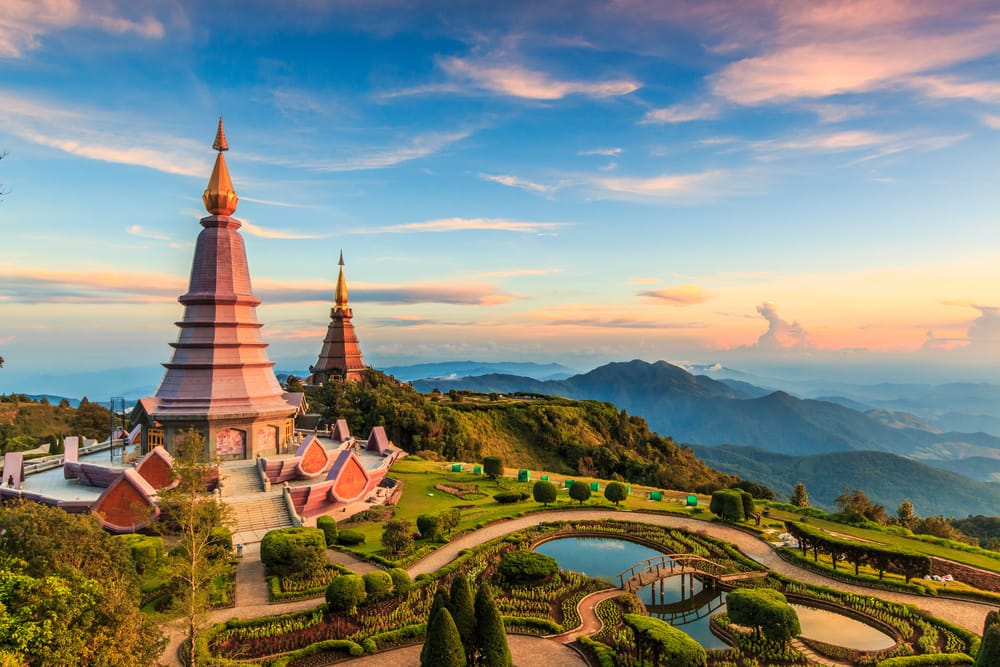
Chiang Mai. Two hundred-odd temples, a moat around a square old city, and a food scene that will genuinely reset your standards for what a noodle soup can be. We are not objective about khao soi and we've stopped pretending otherwise. Go in December or January, when the mornings are cool enough for a jumper and the mountains behind the city are actually visible.
Khao Sok National Park. Rainforest older than the Amazon, limestone karsts rising straight out of an emerald lake, and floating bungalows where you wake up on the water with gibbons going off somewhere in the trees. There's no wifi worth speaking of and that's the entire point. A minor detail: parts of this forest have been standing for roughly 160 million years.
Railay. Technically a peninsula, functionally an island, because the cliffs cut it off from any road. You arrive by longtail boat. Climbers come for the limestone, everyone else comes for the beach and then finds themselves watching the sunset from the same rock two nights running. Something happens to people here around day three. We don't make the rules.
Which Getaway Matches Your Season
Here's where the season question and the trip question turn out to be the same question. Because Thailand's north and south peak at different times, the Getaways range is built to be picked by calendar rather than by whim: there's a north trip, a south trip, a full-country trip, and two that carry you into Vietnam.
All five are open to travellers aged 18 to 39, and every Getaway includes twin-share or upgraded accommodation as standard rather than crowded dorms, travel medical insurance through Global Travel Cover for the length of the trip, a Global Guide capturing photos and video so you're not the one filming everything, included sunset drinks, later starts after big nights, and animal experiences vetted for welfare.
Northern Thailand: Hidden Kingdom runs 8 days. Bangkok by tuk tuk and canal boat, then Chiang Mai and the mountain roads up to Pai, taking in an ethical elephant sanctuary, limestone caves and a home-cooked dinner with local hosts. It runs November to April, and within that window the earlier months are the better ones: crop burning around Chiang Mai in March and April can bring smog and noticeably poorer air quality.
Southern Thailand: Lost & Found is also 8 days. Phuket, Khao Lak, the Tha Din Daeng mangroves, Cheow Lan Lake and the Krabi islands. Every stop on this one sits on the Andaman side, which lines up exactly with its November to April window and explains why it isn't offered mid-year. If your dates fall in July or August, this is the trip to swap out rather than the one to squeeze in.
Ultimate Thailand: North to South is 15 days. Two weeks covering the whole country, so you want the window where the north and the Andaman coast are both behaving. That's the November to April run, and December through March is the sweetest part of it.
Southern Thailand & Northern Vietnam is 15 days across two countries on one November to April run. Northern Vietnam gets genuinely cold from November to March, so pack a jacket alongside the swimmers, and expect the second half of this trip to feel nothing like the first.
Ultimate Thailand & Vietnam is the long one at 29 days. Nearly a month across both countries, long enough that you'll feel the seasons shift underneath you. Same November to April window, with February and March the most reliable stretch across every region it touches.
You can absolutely put all of this together yourself. Plenty of people do, and Thailand is one of the easier countries in the world to travel independently. It's also slower, and a small-group trip costs more upfront than winging it with a backpack and a booking app. What you're buying is the routing decisions already made by people who know which coast works in August, plus a group you didn't have to find in a hostel common room.
What to Pack, by Season
- Cool season: a light jacket or jumper for northern evenings and early mornings, which catches people out every year. Long trousers for temples.
- Hot season: loose natural fabrics, a proper wide-brim hat, electrolyte sachets, and more water than you think. If you're heading north, check air quality forecasts and consider a mask.
- Green season: a light rain shell rather than an umbrella, quick-dry everything, sandals with grip, and a dry bag for your phone and passport.
- All year: modest clothing that covers shoulders and knees for temple visits, reef-safe sunscreen, and mosquito repellent with DEET or picaridin (don’t skip this one).
Before You Fly
- Entry requirements: these vary significantly by nationality and change periodically. Check the current rules with the Thai embassy or consulate for your country, and confirm your passport has at least six months of validity remaining.
- Money: Thailand is still largely a cash economy outside big hotels and malls. ATMs are everywhere and charge a per-withdrawal fee, so fewer, larger withdrawals work out cheaper.
- Health: speak to a travel clinic six to eight weeks before departure about routine vaccinations and anything region-specific. Dengue is present year-round and peaks in the wet season, so repellent is genuinely a health measure rather than a comfort one.
- Insurance beyond the trip: your Getaway includes travel medical cover for the duration of the tour itself. If you're flying in early, staying on afterwards, or hopping across a border for a few days, that's time outside the tour window. Global Travel Cover, the sister brand in the Global Work & Travel family, covers those edges with no deductible, buy-from-anywhere flexibility, and a 24/7 emergency line.
- Connectivity: tourist SIMs and eSIMs are cheap and available at every major airport.
Reality Check
Peak season is genuinely busy. Between December and February, popular islands and Chiang Mai during Yi Peng book out well in advance, and prices climb accordingly. The green season is quieter and cheaper, but on the Andaman side some islands reduce ferry services and a few smaller operators close entirely for months, so a wet-season island plan needs more flexibility than a dry-season one. Northern haze between late February and April is real and under-reported in most travel content, and if you have asthma or any respiratory condition it should factor into your dates. Heat in April is not a novelty either: it regularly pushes past 38 degrees and it will shorten your days whether you plan for it or not.

Final Thoughts
Thailand rewards people who show up at the right time in the right half of the country, and it's genuinely forgiving to everyone else. There is no month where the food stops being extraordinary, no month where the ferry ride isn't beautiful, no month where somebody won't be grilling something on a stick at seven in the evening while the light goes orange.
Get the timing right and you'll have a very good two weeks. Get it slightly wrong and you'll still have a very good two weeks, just a little more soggy - great if you’re right into RTV adventure vibes!

Jessie Chambers
Jessie is a globetrotter and storyteller behind the Global Work & Travel blog, sharing tips, tales, and insights from cities to remote escapes, informed by the collective experience and real-world knowledge of teams across our business.