




When's The Best Time To Visit Vietnam
by Jessie Chambers 2 months ago
9 MIN READ
Everyone tells you Vietnam is a country. Nobody warns you that it feels like three.
It runs more than 1,600 kilometres from the Chinese border down to the Gulf of Thailand, thin as a ribbon, and the top and the bottom have almost nothing in common weather-wise. There is a real winter in the north. Hanoi in January is grey and raw and people wear actual coats. Meanwhile Ho Chi Minh City, on the same day, is sitting at thirty-two degrees and everyone is replicating a bit of a sweaty betty.
So when someone asks what the best time to visit Vietnam is, the honest answer is a question back: which Vietnam do you want to experience?
The good news is that it’s easy to travel, so if you want a little bit of everything you can totally have it. Each climate offers something unique and special and there’s not really one better than the other, it’s more about what’s the vibe for this adventure, and the best bit… There's literally something for everyone.
So if you're wanting to add extra chilli to the banh mi, saddle up and get ready for the extra crispy pork.
The Short Answer
The best time to visit Vietnam is February to April. It's the only stretch of the year when the north, the centre and the south are all in their dry seasons at once, which makes it the strongest window for anyone travelling the full length of the country.
Outside that window, pick your region:
- North (Hanoi, Sapa, Ha Long Bay): best in spring and autumn, roughly March to May and September to November.
- Central (Hue, Hoi An, Da Nang): best February to August, avoiding the autumn typhoon season.
- South (Ho Chi Minh City, Mekong Delta, Phu Quoc): best December to April, its dry season.
Vietnam's Three Climates, Explained
Vietnam sits under two monsoon systems that hit different parts of the country at different times, which is why it never has just one rainy season.
The north has four real seasons. Winter, roughly November to March, is cool and often damp, with Hanoi sitting well below what most people expect from Southeast Asia and the mountains around Sapa and Ha Giang getting genuinely cold. Summer, June through August, is hot, sticky and wet, with the heaviest rain of the year. Spring and autumn are the comfortable bookends, and autumn in particular is when the rice terraces in the northern mountains turn gold just before harvest.
The centre is a coastal exception. Hue, Hoi An and Da Nang enjoy a long dry run from around February to August, then flip into a wet season from September to December with the heaviest rain in October and November. This region also carries the country's typhoon risk. Vietnam sees several tropical storms a year and most of them make landfall on the central coast, which is worth knowing before you book Hoi An in October.
The south has two seasons and not much drama. Dry from around November or December to April, wet from May to October, with temperatures that barely move all year. The wet season here is the predictable kind: sunny mornings, a heavy afternoon burst, then done. The Mekong Delta floods gently from August to November, which sounds like a problem and is actually when the region is at its greenest and most photogenic.

Month by Month, at a Glance
The Regional Split That Decides Your Trip
Look at that table again and notice the gap. There are only three months, February, March and April, where all three columns are in good shape at the same time.
That single fact should drive most Vietnam bookings, and it's the thing generic "best time to visit" advice tends to flatten out. Here's how to use it.
- Travelling the whole country? Aim for February to April. Second-best is October to November if you're willing to route around central Vietnam, which is the region at risk in those months.
- Only doing the north? September to November is arguably better than spring. The air is clear, the heat has broken, and late September into October is when the terraces around Sapa go gold.
- Only doing the south? December to April, comfortably. This is also the window for Phu Quoc.
- Only doing the centre? February to May. Hoi An in the dry season is a completely different town to Hoi An in a November flood, and Hoi An does flood.
Best Time for Ha Long Bay, Sapa and the Coast
Ha Long Bay. Cruises are most comfortable from March to May and September to November. Winter brings a persistent grey mist that photographs beautifully and hides the karsts completely, and summer brings the storms that cancel sailings. Book an overnight and accept that the weather is genuinely a lottery outside the shoulder months.
Sapa and the northern mountains. March to May for wildflowers and green terraces, September to October for the gold harvest colour. Winter is cold and foggy with occasional frost at altitude, and summer is when the trekking paths turn to mud.
Hoi An and the central coast. February to August. Avoid October and November unless you have a high tolerance for rain and a flexible itinerary, because this is peak typhoon and flood season.
Tet, the Lunar New Year. Falls in late January or February and moves each year. The country effectively closes for several days: businesses shut, transport books out weeks ahead, and prices climb. It's a fascinating time to be there and a difficult time to move around. Decide which of those matters more to you.
Places You Need to See
Ha Giang. The far north, up against the Chinese border, and the most spectacular road in the country runs through it. Limestone mountains stacked to the horizon, villages clinging to switchbacks, and a loop that people ride over three or four days. We would reorganise an entire itinerary around this one and we have no notes to add.
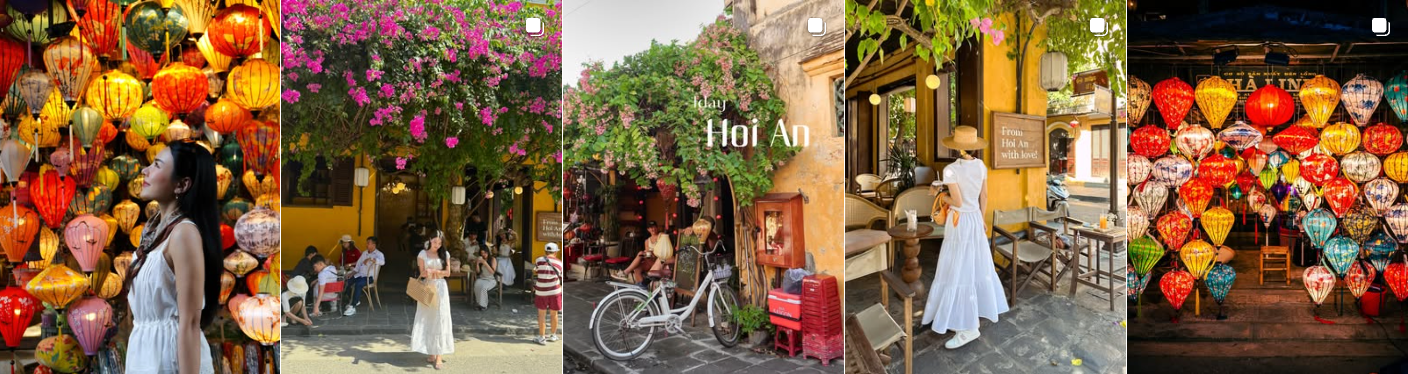
Hoi An. A lantern-lit old town on a river where the tailors will make you something in twenty-four hours and the cao lau is only made properly here because of the specific well water it needs. Yes, it's busy. Overrated: the daytime crowds. Underrated: the same streets at six in the morning. The golden hour is so spectacular and honestly worth the hustle.
The Mekong Delta. Floating markets that start before sunrise, coconut groves, and a network of waterways that functions as roads. You go expecting a day trip and end up wanting to sleep in a homestay and watch the water do its thing. Bring an appetite. The food here is going to open up your senses like watching Nigella for the first time.
Which Getaway Matches Your Season
Vietnam's regional split maps almost exactly onto how the Getaways range is built: a north trip, a south trip, a full-length trip, and two that pair Vietnam with Thailand. Which one suits you is mostly a function of what month you can travel.
All of them are open to travellers aged 18 to 35. Every trip comes with twin-share or upgraded accommodation as standard instead of crowded dorms, travel medical insurance through Global Travel Cover for the length of the trip, a Global Guide handling photos and video, included sunset drinks, later starts after big nights out, and animal experiences vetted for welfare. Smaller style groups and a little bit for every type of traveller to ensure you have flexibility, choice and lots and lots of options!
Northern Vietnam Untamed, 8 days. Hanoi, the rice terraces of Pu Luong, the limestone country around Ninh Binh, then an overnight cruise on Ha Long Bay. It runs November to April, and the thing to know is that the north gets properly cold in that window. Global Work & Travel's own trip notes say to pack a jacket or fleece for the Ha Long cruise and the Pu Luong valleys. Bring worn-in shoes too, since two of the days are hiking and cycling.
Southern Vietnam Pho Real, 8 days. Worth reading the route on this one, because the name undersells it: it starts in Hoi An, which is central Vietnam, then runs down through Nha Trang to Ho Chi Minh City and the Mekong Delta, with two overnight trains along the way. Starting in the centre is exactly why it runs November to April rather than year-round, since central Vietnam takes the typhoon season from September to December.
Ultimate Vietnam Without Compromise, 16 days. Sixteen days covering the length of the country, which means all three climate zones on one trip. It sits in the same November to April window, and February to April is the part of that window when the north, centre and south are all in decent shape at once.
Southern Thailand & Northern Vietnam, 15 days. Two countries on one November to April run, pairing the Thai Andaman coast with the north of Vietnam. Expect a real temperature swing between the two halves, since northern Vietnam is cold in exactly the months southern Thailand is at its best.
Ultimate Thailand & Vietnam, 29 days. Nearly a month across both countries, long enough that you'll feel the seasons move underneath you. Same November to April window, with February and March the most dependable stretch across everything it covers.
What to Pack, by Region and Season
- Northern winter: a proper jacket, layers, and closed shoes. People consistently underpack for this and consistently regret it.
- Northern summer and the south's wet season: a light rain shell, quick-dry clothing, and sandals with grip.
- Central coast, September to December: waterproofs that actually work, plus a dry bag. Flooding is a normal seasonal event here, not a freak one.
- Everywhere, all year: modest clothing for temples and pagodas, strong mosquito repellent, and reef-safe sunscreen if you're heading to the islands.
- If you're doing Ha Giang or Sapa: broken-in walking shoes and something windproof, whatever the month says.
Before You Fly
- Entry requirements: Vietnam's rules vary by nationality and have changed more than once in recent years, including the e-visa system and the list of exempt countries. Check the current position with the Vietnamese embassy or consulate for your country well ahead of booking, and make sure your passport has at least six months of validity left.
- Money: the dong runs to large numbers and cash is still king outside cities. Card acceptance is good in Hanoi, Da Nang and Ho Chi Minh City, patchier everywhere else.
- Health: see a travel clinic six to eight weeks out. Dengue is present, particularly in the wet season, so repellent counts as a health measure.
- Insurance beyond the trip: your Getaway includes travel medical cover for the tour itself. Anything either side of it, an early arrival, a few extra days at the end, a hop across a border, sits outside that window. Global Travel Cover, the sister brand in the Global Work & Travel family, fills those gaps with no deductible, buy-from-anywhere flexibility and a 24/7 emergency line.
- Getting around: domestic flights are cheap and frequent, which matters in a country this long. Sleeper trains are an experience, not a shortcut.
Reality Check
Central Vietnam's typhoon season is the single most underplayed thing in Vietnam travel content. October and November bring real storms and real flooding to Hue, Hoi An and Da Nang, and itineraries do get disrupted. If you're travelling then, build slack into your plans and don't book non-refundable connections tightly. Tet (Vietnamese Lunar New Year) is the other one: it's a wonderful time to witness and a hard time to move, with transport booked out and many businesses closed for the better part of a week. Northern winter catches people out too, since a lot of travellers arrive with tropical expectations and no jacket. And Ha Long Bay is genuinely weather-dependent in a way that no operator can control, so treat a clear-day sailing as luck rather than as something you've paid for.

Final Thoughts
You don't have to see all of Vietnam. Almost nobody does it properly in one go, and the people who try tend to spend the trip on night buses instead of in the places the night buses are taking them to.
Pick the region that matches the month you can actually travel, go deep on that one, and leave the rest for a second trip. The country isn't going anywhere, the food will still be absurd, and you'll come back with something better than a full checklist.
One region, done properly. That's the move.

Jessie Chambers
Jessie is a globetrotter and storyteller behind the Global Work & Travel blog, sharing tips, tales, and insights from cities to remote escapes, informed by the collective experience and real-world knowledge of teams across our business.