



All you need to know about teaching English in Vietnam
by Jessie Chambers 2 months ago
8 MIN READ
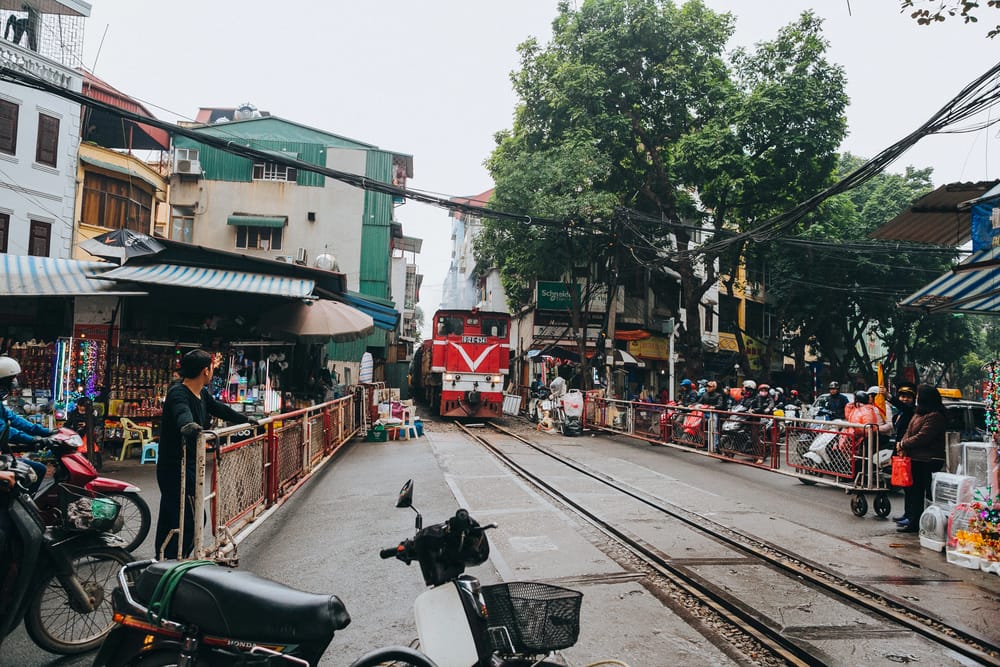
Week one, crossing the road in Ho Chi Minh City feels like a stunt you didn't agree to. A thousand motorbikes, no gaps, and the only known technique is to step out slowly and never, ever flinch. Week six, you're doing it one-handed with an iced coffee, mid-text, barely looking up. That's the whole country in a nutshell. It overwhelms you on day one and is quietly the most normal place on earth by week six.
Teaching English is your way in. You stand at the front of a room full of kids who think you're hilarious, you finish by early afternoon, and the rest of the day, and the weekend, and the whole of Southeast Asia, is yours. The coffee will ruin every flat white you ever have again. We're sorry. We're not sorry.
This is the full guide to doing it for real: how the trip works, the qualification, the visa and work permit nobody explains properly, and what life actually looks like once chaos turns into home.
Teach in Vietnam at a Glance
The quick read before the detail:
- What it is: you get TESOL-certified and matched into a paid teaching role in Vietnam, through a trip that handles the qualification, the visa, and the job introductions.
- The journey: orientation week in Ho Chi Minh City, then a three-week TESOL course in Hua Hin, Thailand, then back to Vietnam with a business visa and a teaching match. Two countries, one trip.
- Duration: 1 to 12 months. The one-month option is the course on its own. Adding a teaching match means committing to a longer stay.
- Who it's for: ages 21 to 55, with a bachelor's degree, from an eligible English-speaking country.
- The visa: there's no working-holiday route into teaching here. You enter on a business visa, and a sponsoring school arranges the work permit and work visa that make teaching legal.
- Included: the TESOL course, job matching, accommodation through orientation and the course, cultural activities, visa guidance, a Trip Coordinator, and 24/5 support.
- On you: flights, insurance, food, the visa, your background check, and spending money.
Why Vietnam for Teaching
Demand is the quiet headline. English is treated as a ticket to a better future right across Vietnam, which means qualified teachers are wanted in nearly every city, and that hunger is not slowing down. You're not scrapping for scraps of work. You're walking into a market that actively wants you.
Then there's the life around the job. Your money goes embarrassingly far. A bowl of pho that ruins you for all other soup costs less than a coffee back home, rent is gentle, and a weekend away is the price of a night out in Sydney. You teach a comfortable week and still bank enough to actually travel.
And the travel is the kicker. Vietnam alone is a thousand kilometres of coastline, mountains, caves, and cities that feel like different countries top to bottom. Past the border, the entire region is on your doorstep: Cambodia, Thailand, Laos, the Philippines, all a short, cheap flight from a Friday afternoon. A teaching base here isn't a year in one place. It's a launchpad for a whole chapter.
The food deserves its own sentence. You will become unbearable about it. Your friends back home will hear about banh mi until they block you.
How It Works: Orientation, TESOL in Thailand, Then the Classroom
The shape of this trip is unusual, and that's the good bit. It runs across two countries before you teach a single lesson.
Week one, Ho Chi Minh City. You land, meet your cohort, and ease in with a proper orientation rather than a cold drop. There's a Vietnamese cooking class, a martial arts session, a visit to the Cu Chi tunnels and the War Remnants Museum, and a welcome dinner to round it off. It's a week designed to turn a foreign city into somewhere you can find your feet.
Weeks two to four, Hua Hin, Thailand. Next you fly to the Thai coast for a three-week TESOL course, taught in person with real classroom practice on real students, so you finish actually able to run a lesson, not just holding a certificate. The cohort here is bigger, which makes for a richer few weeks and a wider group of friends scattering across Asia afterwards.
Then back to Vietnam to teach. While you're still in Thailand, interviews for Vietnamese teaching roles begin remotely, and your business visa is sorted so you re-enter ready to start. No prior experience is needed, the course is built for first-timers, and the in-country partner team keeps working until you're matched with a paid role. Then the actual adventure, the one you came for, begins.
The Visa and Work Permit Reality
This is the part most pages gloss over and a few get plain wrong, so here's the honest mechanics.
Teaching English legally in Vietnam takes two documents working together. A work permit, issued by the provincial labour authorities and sponsored by your employer, and an LD2 work visa, which your school arranges once that permit is approved. A business visa gets you into the country and lets you start the process, but it's the employer-sponsored work permit and work visa that make the teaching itself legal. Anyone telling you a tourist or business stamp alone is enough is skipping a step.
To qualify for the work permit, under Vietnam's current rules (Decree 219/2025), you need:
- A bachelor's degree in any field. This is the non-negotiable one.
- A TEFL or TESOL certificate of at least 120 hours. The trip's course covers this.
- A clean criminal background check and a medical check, with the background check legalised and translated.
- A sponsoring employer: a licensed school or institute, which is exactly what the job-matching side sets you up with.
Native English speakers from the recognised countries, Australia included, qualify on degree plus TESOL. If English isn't your first language, you'll usually need a proficiency certificate on top.
One honest warning, because it matters: you'll hear about people teaching on tourist visas, cash in hand, skipping the permit. It's illegal, and getting caught can mean fines, deportation, and a ban on returning. The entire value of going the structured route is that you start on the right side of all of it, with the paperwork done properly the first time. Your Trip Coordinator guides you through the visa steps, and the partner school handles the employer-side permit.
What You Need to Qualify
The list is short but firm, and a couple of items need a head start:
- Be aged 21 to 55.
- Hold a bachelor's degree in any subject. Three-year Australian, Kiwi, and British degrees are accepted. Without one, there's no standard legal route, so this is the dealbreaker item.
- Be from an eligible English-speaking country, or hold a recognised English proficiency certificate if you're not.
- No convictions on your record from the past five years, plus an official background check legalised for the permit.
- No teaching experience required: the TESOL course is built into the trip and designed for beginners.
Two of these need a head start: getting your degree and your background check authenticated and translated can run for weeks. So the moment Vietnam is the plan, start that paperwork. It's the difference between a smooth arrival and a frustrating wait.
Where You'll Be Based, and Beyond
Most teaching roles land in and around Ho Chi Minh City, and it's a brilliant place to be a newcomer. It's the country's loudest, fastest, most international city, where rooftop bars look down on street-food alleys and there's a community of teachers already living the exact life you're stepping into. You'll have people from week one.
The rest of the country is your reward for a week's work. Hanoi in the north is older, leafier, and more atmospheric, all lakes and Old Quarter chaos and the best egg coffee going. Hoi An is the lantern-lit postcard, a riverside town of tailors and beaches where a weekend stretches into something you don't want to end. Da Nang brings the beach-city balance, all sand and surf and a smarter pace.
Then the big-ticket days out: the limestone islands of Ha Long Bay, the record-breaking caves of Phong Nha, the highland cool of Da Lat. School terms come with breaks, weekends are yours, and the country rewards anyone willing to jump on a night bus or a cheap flight. You came to teach. You'll leave having seen more than most people manage in a lifetime of holidays.
What the Global Work & Travel Package Includes
Plenty of people teach in Vietnam without any structured help, arranging their own course, legalising their own documents across two countries, and job-hunting cold in a city they've never set foot in. Doable, sure. Also slow, easy to trip up, and expensive the second a document bounces back rejected. The supported route costs more than going alone, and that's the honest trade: you're paying for the course, the introductions, and a team that has run this hundreds of times.
Here's what Teach English in Vietnam: Ho Chi Minh City with Global Work & Travel covers:
- A certified TESOL course: three weeks in Hua Hin with real teaching practice and an internationally recognised qualification.
- Job matching: the in-country partner network setting up interviews and working with you until a paid role is confirmed.
- Accommodation through your orientation week and the TESOL course, plus support finding your longer-term place.
- A welcome orientation and cultural activities: the cooking class, martial arts, Cu Chi tunnels, museum visit, and welcome dinner.
- Visa guidance and a Trip Coordinator to steer you through each step, plus interview preparation and a pre-departure guide.
- The rest of the kit: airport transfers, a Personal Travel Concierge, your Certificate of Completion, gWorld and its traveller community, Global Academy courses, Marketplace discounts, and 24/5 local support with a Global Emergency Line for anything urgent.
On insurance: it isn't included, and you'll want it, both for the move and for every weekend you spend bouncing around the region. Global Travel Cover is the sister-brand option, with comprehensive travel and medical cover, a $0 deductible, the freedom to buy and renew from anywhere, and a 24/7 emergency line.
That leaves a clean line between the two. Inside the trip: the course, the job matching, the orientation, and your early accommodation. Down to you: flights, insurance, food, the visa, your background check, and spending money.
Reality Check
The degree is the hard gate, not a soft preference. No bachelor's degree means no standard legal work permit, so if you don't have one, sort that before anything else. Document legalisation is the next trap: getting your degree and background check authenticated and translated takes weeks, sometimes longer, so an early start beats a scramble every time.
Remember that a business visa lets you in, but it's the work permit your school sponsors that makes teaching legal, and that distinction is the one people regret ignoring. Competition for the best roles is real, so treat the TESOL course as the start line, not the finish. And the first few weeks are a genuine adjustment: the heat is serious, the traffic is a contact sport, and your body needs a beat to catch up. None of it is a reason to stay home. It's just the honest shape of the leap.
Ready to Teach in Vietnam
If you'd rather arrive qualified, matched, and pointed in the right direction than project-manage the whole thing from your laptop, that's what Teach English in Vietnam: Ho Chi Minh City with Global Work & Travel is built around. The course, the job introductions, the visa steps, and the soft landing, with a team on call once you're there. Live dates, pricing, and the full inclusions sit on the product page.
The degree is on you. So is the appetite for a louder, faster kind of life, and a tolerance for being hopeless at crossing the road for a week or two. The rest, Vietnam handles, and it does not do anything by halves. The hardest part is booking it. Everything after is the kind of year you'll spend a long time failing to explain to people back home.

Jessie Chambers
Jessie is a globetrotter and storyteller behind the Global Work & Travel blog, sharing tips, tales, and insights from cities to remote escapes, informed by the collective experience and real-world knowledge of teams across our business.